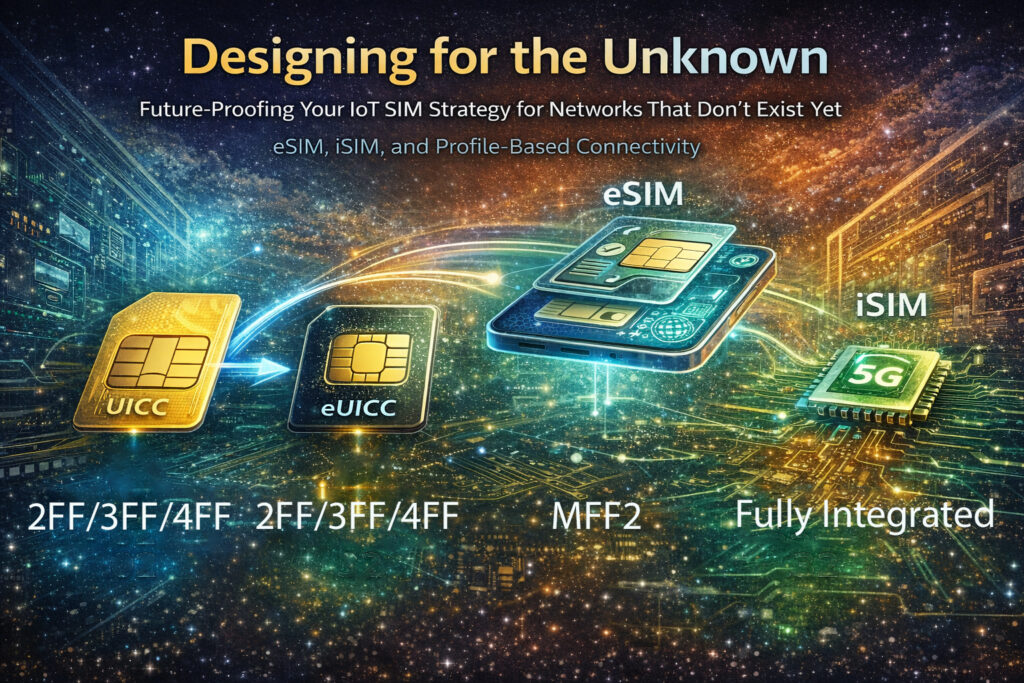
Designing for the Unknown

IoT SIM card evolution

Future-Proofing Your IoT SIM Strategy for Networks That Don’t Exist Yet

IoT deployments are built for longevity. Devices placed in the field today are often expected to operate for five, ten, or even fifteen years. But the networks they rely on are anything but static. Cellular standards evolve, carriers merge, spectrum shifts, and entire generations of connectivity rise and fall.

Designing an IoT solution without accounting for this change is like building a bridge that assumes the river will never move.

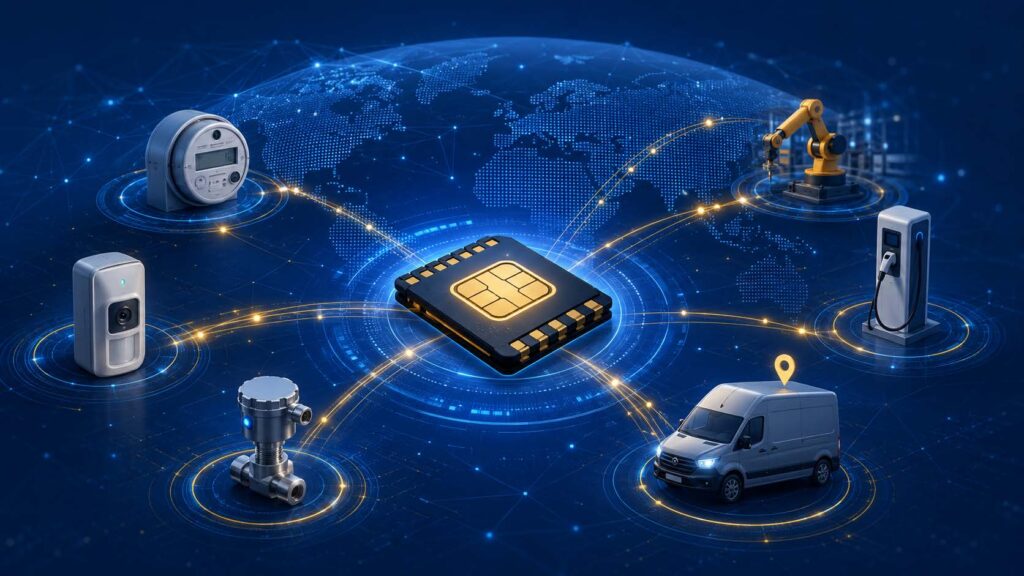
Future-proofing your IoT SIM strategy means preparing for networks that do not yet exist, technologies that are still emerging, and requirements that will evolve over time. At the center of this strategy are eSIM, iSIM, and profile-based connectivity, along with the foundational shift from traditional UICC SIMs to eUICC architectures.

Let’s unpack what this means in the real world.


The Problem with Static Connectivity

Traditional IoT deployments often rely on a fixed SIM profile tied to a single carrier or roaming agreement. This works well at the start, but over time, limitations emerge:

Replacing SIM cards in the field is expensive, slow, and sometimes impossible. Devices embedded in industrial equipment, underground infrastructure, or remote environments cannot easily be accessed.

Future-proofing begins by eliminating the need for physical replacement.


UICC vs eUICC: The Foundation of Flexibility

At the heart of SIM evolution is the shift from UICC to eUICC.

UICC (Universal Integrated Circuit Card)

  • Traditional SIM architecture
  • Stores a single operator profile
  • Changing carriers requires physical SIM replacement
  • Limited flexibility once deployed

UICC SIMs are reliable and widely used, but they are static by design.


eUICC (Embedded Universal Integrated Circuit Card)

  • Supports multiple operator profiles
  • Profiles can be downloaded, updated, or switched remotely (OTA)
  • Enables remote provisioning and lifecycle management
  • Foundation for eSIM and iSIM technologies

An eUICC SIM transforms connectivity from a fixed configuration into a dynamic system.

Instead of asking “Which network should this device use?” once, you can ask it continuously over the device’s lifetime.


eSIM: Remote Control for Connectivity

An eSIM is essentially an eUICC-capable SIM that allows remote profile management.

Key capabilities include:

  • Over-the-air (OTA) profile downloads
  • Remote carrier switching
  • Multi-network provisioning
  • Lifecycle updates without physical access

For global IoT deployments, this is a game changer.

A device deployed in Europe today can be reconfigured for Asia tomorrow without ever being touched. As networks evolve, profiles can be updated to maintain compatibility and performance.


iSIM: Connectivity Moves Inside the Chip

The next evolution is iSIM (Integrated SIM).

Instead of being a separate hardware component, iSIM functionality is embedded directly into the device’s main chipset.

Benefits of iSIM:

  • Reduced hardware footprint
  • Lower power consumption
  • Improved security (fewer physical attack surfaces)
  • Simplified device design

For ultra-compact or high-volume devices, iSIM represents the future of connectivity.

From a strategy perspective, iSIM continues the trend: connectivity becomes software-defined, not hardware-bound.

FeatureSIMeSIMiSIM
Physical Card
Separate Chip
Built into SoC
Remote Provisioning
Space EfficiencyLowMediumUltra High
Ideal ForPhonesPhones + IoTMass IoT

eUICC Standards: .02 vs .32 Explained

Not all eUICC implementations are the same. The GSMA standards define how remote SIM provisioning works, and two key specifications matter in IoT:

eUICC M2M Standard (.02)

  • Designed for machine-to-machine (M2M) deployments
  • Uses a server-driven model
  • Typically controlled by the operator
  • Less flexible for end-user profile management
  • Common in early IoT deployments

This model works well for fixed deployments but can limit flexibility when multiple operators or dynamic switching is required.


eUICC Consumer / IoT Standard (.32)

  • More flexible and scalable architecture
  • Supports remote profile management via standardized APIs
  • Enables multi-operator ecosystems
  • Better suited for modern IoT and global deployments
  • Aligns with eSIM experiences on smartphones

The .32 standard shifts control closer to the enterprise or platform provider, enabling more dynamic connectivity strategies.


Profile-Based Connectivity: The Real Game Changer

Future-proofing is not just about hardware. It is about how connectivity is managed over time.

Profile-based connectivity allows devices to:

  • Store multiple operator profiles
  • Switch profiles based on location or performance
  • Download new profiles as networks evolve
  • Retire outdated profiles automatically

This creates a living connectivity layer that adapts alongside your deployment.

For example:

  • A device may use Profile A in North America
  • Switch to Profile B in Europe
  • Download Profile C when a new 5G IoT network becomes available

All without physical intervention.


Designing for Network Evolution

To future-proof your IoT SIM strategy, you need to design with change in mind.

1. Plan for Network Sunset Events

2G and 3G shutdowns have already disrupted many deployments. Future networks will also evolve. Ensure your devices can adapt through profile updates.

2. Prioritize Multi-Network Access

Avoid single-operator lock-in. Multi-IMSI or profile-based strategies provide resilience as network conditions change.

3. Enable Remote Provisioning

Every device should be manageable without physical access. OTA updates are no longer optional.

4. Separate Hardware from Connectivity Logic

Use eUICC/eSIM/iSIM to decouple device hardware from network identity.

5. Choose Forward-Compatible Standards

Favor eUICC .32-based solutions where possible for long-term flexibility.


The Cost of Standing Still

The risk of not future-proofing is not immediate failure. It is gradual limitation.

Devices may:

  • Lose connectivity as networks shut down
  • Become stuck on suboptimal carriers
  • Incur higher roaming costs
  • Require expensive replacement programs

What begins as a technical decision becomes a business constraint.


The Shift to Software-Defined Connectivity

The broader trend is clear: connectivity is becoming software-defined.

Just as cloud computing abstracted hardware into scalable services, eSIM and iSIM are abstracting connectivity into dynamic, programmable layers.

This enables:

  • Faster deployment into new markets
  • Real-time optimization of network performance
  • Continuous adaptation to regulatory changes
  • Longer device lifecycles

Connectivity becomes something you manage, not something you install once and forget.


Designing for the Unknown

The phrase “future-proofing” can be misleading. You cannot predict every change that will happen over the next decade.

What you can do is design systems that adapt to change.

That means:

  • Choosing flexible SIM architectures
  • Embracing remote provisioning
  • Leveraging profile-based connectivity
  • Planning for continuous evolution

The goal is not to eliminate uncertainty. It is to build systems that thrive within it.


The Final Signal

IoT deployments are long-term investments operating in a rapidly changing connectivity landscape.

UICC SIMs represent a fixed past.
eUICC, eSIM, and iSIM represent a dynamic future.

By adopting flexible standards like eUICC .32 and embracing profile-based connectivity, organizations can ensure their devices remain connected, competitive, and operational no matter how networks evolve.

Because in IoT, the biggest risk is not what you don’t know.

It is what you assume will never change.

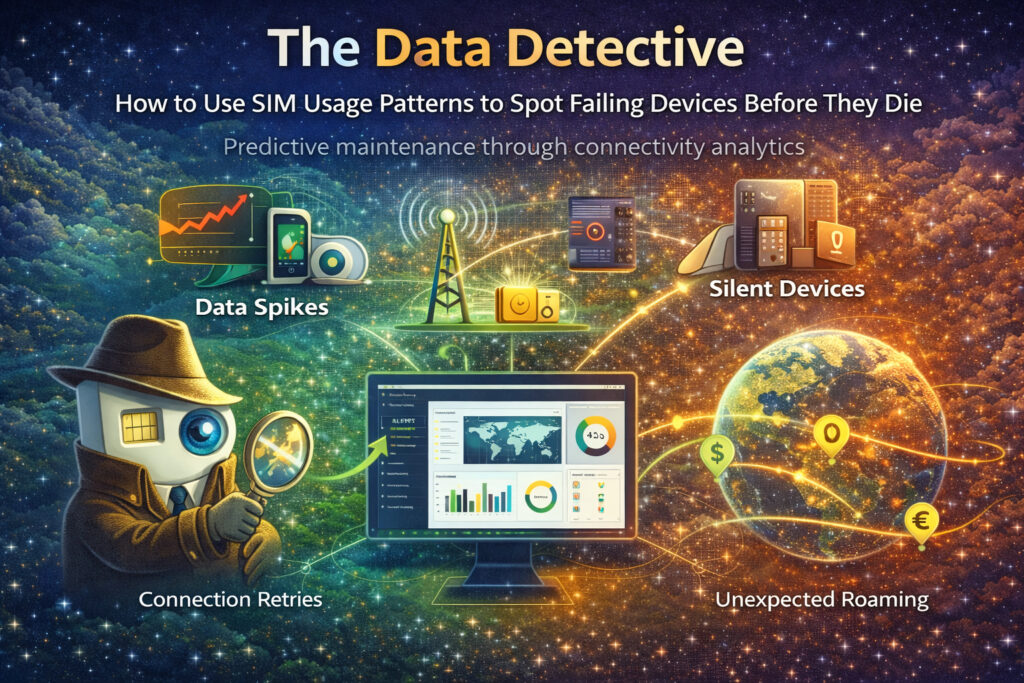
The Data Detective

How to Use SIM Usage Patterns to Spot Failing Devices Before They Die

In large IoT deployments, devices rarely fail without leaving clues. Sensors, trackers, meters, and machines constantly communicate through cellular networks, sending data packets, establishing sessions, and reconnecting when conditions change. Hidden inside those connectivity logs is a quiet story about the health of each device.

Most teams focus on application data when monitoring IoT systems. Temperature readings, machine telemetry, location updates, and sensor outputs receive most of the attention. But another valuable dataset often goes overlooked: SIM connectivity behavior.

SIM usage patterns can reveal early warning signs of device failure long before the device actually stops working. When analyzed properly, connectivity analytics becomes a powerful predictive maintenance tool. Think of it as turning your IoT platform into a digital detective, quietly watching for suspicious patterns before problems escalate.

Every Device Leaves a Connectivity Fingerprint

Every IoT device develops a recognizable network “fingerprint” over time. This fingerprint includes how often it connects, how much data it transmits, which networks it attaches to, and how stable those connections are.

For example, a smart meter might send 500 KB of data every six hours. A vehicle tracker might send 1 MB of data every hour while the vehicle is moving. An industrial sensor might send a few kilobytes every minute.

Once a device has been operating for a few weeks, its connectivity behavior becomes predictable. This baseline becomes the reference point for detecting anomalies.

When that pattern suddenly changes, it often means something is wrong.

Warning Sign #1: Unexpected Data Spikes

One of the most common early indicators of device malfunction is sudden increases in data usage.

A device that normally sends small telemetry packets may suddenly start transmitting large volumes of data. This can happen for several reasons:

  • Firmware loops repeatedly attempting uploads
  • Sensors sending corrupted readings
  • Misconfigured update processes
  • Communication retries caused by poor signal

For example, a device that normally uses 2 MB per day might suddenly jump to 20 MB. That spike may not immediately break the system, but it signals that something abnormal is happening.

If left unchecked, this behavior can drain batteries, overload networks, and dramatically increase operational costs.

Connectivity analytics allows operators to detect these spikes immediately and investigate before the device fails completely.

Warning Sign #2: Connection Retry Storms

Another red flag is a sudden increase in network attachment attempts.

Devices constantly attach and detach from cellular networks as part of normal operation. But excessive connection retries can signal deeper issues.

A retry storm may indicate:

  • Weak or degrading antennas
  • Failing radio modules
  • SIM authentication problems
  • Firmware bugs in the modem stack

When a device repeatedly attempts to reconnect to the network, it consumes significantly more power. Battery-powered devices may drain rapidly as a result.

Monitoring connection frequency allows operators to spot devices that are struggling to stay connected. These devices often fail weeks or months later if the issue goes unresolved.

In predictive maintenance, spotting the struggle early is key.

Warning Sign #3: Silent Devices

Sometimes the biggest warning sign is silence.

If a device normally transmits data every hour but suddenly stops communicating for several hours or days, something may have changed.

Possible causes include:

  • Power supply failures
  • Battery depletion
  • Firmware crashes
  • Physical damage
  • Environmental interference

A single missed transmission might not matter. But repeated gaps in connectivity often indicate a device approaching failure.

Connectivity monitoring platforms can trigger alerts when a device has not connected within an expected time window.

Instead of discovering a dead device during the next maintenance visit, teams can respond immediately.

Warning Sign #4: Geographic Anomalies

Location-aware deployments can also reveal device health through unexpected roaming behavior.

If a device that normally connects through one regional network suddenly attaches to different operators or different countries, it may indicate:

  • Weakening signal conditions
  • Antenna damage
  • Physical relocation of the device
  • Configuration errors

Multi-network IoT SIMs allow devices to choose the strongest available signal, but unusual roaming patterns often signal environmental or hardware issues.

Tracking these shifts helps engineers identify network coverage problems and failing device components.

Turning Raw Data Into Predictive Signals

The key to predictive maintenance through connectivity analytics is turning raw usage data into meaningful signals.

Most IoT SIM management platforms already collect valuable metrics such as:

  • Data usage per device
  • Session counts and durations
  • Network attachment history
  • Signal registration status
  • Geographic connection patterns

By analyzing these metrics over time, operators can establish normal behavior ranges for each device type.

Once these baselines are defined, automated monitoring rules can detect deviations.

For example:

  • Data usage increases by 300 percent
  • Connection retries exceed normal thresholds
  • Device offline longer than expected interval
  • Network operator changes unexpectedly

These deviations become alerts that trigger investigation.

Machine Learning and Pattern Recognition

As deployments scale into thousands or millions of devices, manual analysis becomes impractical.

Machine learning tools are increasingly used to analyze connectivity patterns automatically.

Algorithms can detect subtle changes in behavior that humans might overlook. For example:

  • Gradual increases in retry attempts over several weeks
  • Slow battery drain reflected in reduced connection intervals
  • Minor shifts in signal strength patterns

These early signals often appear long before catastrophic failure occurs.

Predictive models trained on historical data can estimate the probability of device failure and recommend preventive maintenance.

This turns connectivity monitoring into a proactive strategy rather than a reactive response.

Reducing Field Maintenance Costs

One of the biggest benefits of predictive connectivity analytics is reducing unnecessary service visits.

Traditional maintenance models rely on fixed schedules. Technicians inspect devices periodically regardless of whether they actually need attention.

Predictive monitoring allows maintenance to happen only when necessary.

For example:

  • A device showing stable connectivity may not require inspection for years
  • A device showing abnormal connection behavior can be prioritized for immediate service

This targeted approach reduces truck rolls, labor costs, and downtime.

It also improves reliability because failing devices are repaired before they disrupt operations.

Connectivity as a Health Monitor

The idea behind the “data detective” approach is simple: connectivity data reflects the physical and operational state of devices.

A healthy device communicates consistently. It sends predictable volumes of data, connects reliably to networks, and maintains stable session behavior.

When those patterns change, something in the system has changed.

Connectivity analytics therefore becomes a kind of digital stethoscope for IoT infrastructure.

It listens quietly to every device and flags the subtle signals that indicate trouble.

The Future of Predictive IoT Operations

As IoT deployments continue to scale globally, predictive maintenance will become increasingly important.

Connectivity analytics will play a central role in this evolution. Instead of merely enabling communication, SIM platforms will act as intelligence layers that monitor device health in real time.

Future systems may combine connectivity data with:

  • Device telemetry
  • Environmental data
  • Network performance analytics
  • AI-driven anomaly detection

Together, these signals will create a comprehensive view of device behavior.

Failures will no longer be surprises. They will be predicted events.

The Detective Never Sleeps

Every IoT device leaves behind a trail of connectivity clues. When those clues are carefully analyzed, they reveal the early stages of failure long before systems break down.

By turning SIM usage patterns into predictive insights, organizations gain the ability to intervene earlier, reduce downtime, and extend device lifecycles.

The best IoT deployments are not just connected. They are observant.

And in a world of millions of devices, the data detective is always watching.

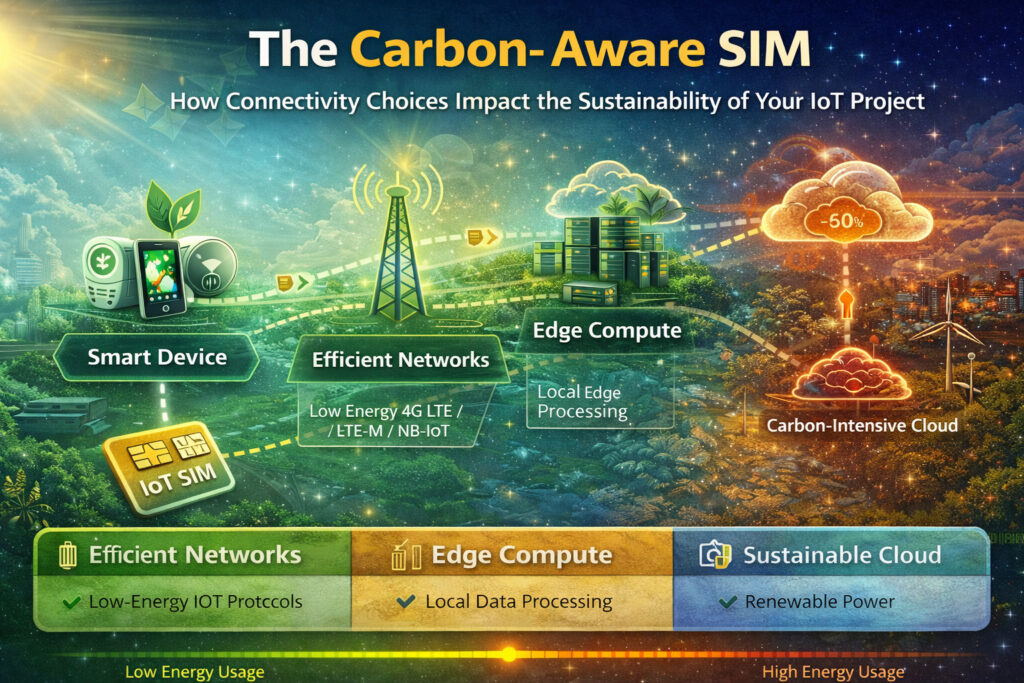
The Carbon-Aware SIM: How Connectivity Choices Impact the Sustainability of Your IoT Project

Sustainability is no longer a side conversation in technology. It sits at the center of strategy, investment, and innovation. Organizations deploying IoT solutions are not just measuring performance and uptime anymore. They are also asking deeper questions. How much energy does this deployment consume? How efficient is the network carrying our data? What is the long-term environmental impact of keeping millions of devices connected?

In this new landscape, connectivity is not just a technical decision. It is an environmental one. The idea of the “carbon-aware SIM” reflects a growing recognition that network choices, data routing, and device behavior all contribute to the overall sustainability footprint of an IoT project.

From smart agriculture to global logistics, the path your data takes can influence how much energy your deployment consumes and how efficiently your infrastructure operates. Understanding this hidden layer of impact is the first step toward building greener IoT systems.

The Hidden Energy Cost of Connectivity

Every connected device consumes power. Sensors wake up, transmit data, and return to sleep. Gateways collect information and forward it to cloud platforms. Networks carry those packets across towers, switching centers, and data centers.

Individually, each transmission uses only a small amount of energy. At scale, the numbers tell a different story. A deployment with hundreds of thousands or millions of devices sending data regularly creates a constant flow of energy demand across the network.

The choice of connectivity technology plays a major role in how much energy is used. Different cellular standards have different power profiles. Some are optimized for long battery life and minimal data transfer. Others prioritize speed and capacity. The key is matching the connectivity strategy to the use case in a way that avoids unnecessary energy consumption.

A carbon-aware SIM strategy begins by asking a simple question: are we using the right network for the job?

Low-Power Networks and Smarter Devices

Technologies like LTE-M and NB-IoT were designed with efficiency in mind. They allow devices to transmit small amounts of data using significantly less power than traditional cellular connections. For battery-powered sensors in remote environments, this can extend device life from months to years.

Longer battery life means fewer site visits, fewer battery replacements, and less transportation. These small changes can add up to a meaningful reduction in emissions, especially in deployments spread across wide geographic areas.

By selecting SIM profiles that prioritize low-power network access when possible, organizations can reduce the energy footprint of their devices without sacrificing connectivity.

LTE-M / NB-IoT vs 4G / 5G: Power Consumption Profiles and Sustainability Impact

When designing a carbon-aware IoT deployment, the choice of cellular technology directly affects energy use, battery life, maintenance frequency, and overall environmental footprint. Not all networks are built for the same purpose. Some prioritize speed and capacity, while others are engineered for efficiency and endurance. Understanding how LTE-M and NB-IoT compare to traditional 4G and emerging 5G connectivity is key to building a more sustainable system.

Designed for Efficiency vs Designed for Performance

LTE-M and NB-IoT were created specifically for IoT devices that transmit small amounts of data at regular intervals. These technologies focus on minimizing power draw, maximizing battery life, and maintaining reliable connectivity in challenging environments.

4G LTE and 5G, on the other hand, were built to support high data throughput, video streaming, and real-time applications. They deliver speed and responsiveness, but that performance typically comes with higher energy consumption.

The result is a clear divide between “efficient” networks and “high-performance” networks.

Typical Power Profiles at a Glance

While exact consumption varies by device and environment, the general patterns are consistent:

NB-IoT (Lowest Power)

  • Designed for ultra-low data usage and infrequent transmissions
  • Devices can sleep for long periods between updates
  • Battery life can extend 5–10+ years in many deployments
  • Ideal for sensors, meters, and environmental monitoring

LTE-M (Low Power, Balanced)

  • Slightly higher power use than NB-IoT, but more flexible
  • Supports mobility, firmware updates, and moderate data rates
  • Often achieves multi-year battery life
  • Well suited for trackers, wearables, and smart infrastructure

4G LTE (Moderate to High Power)

  • Higher transmission speeds require more energy per session
  • Frequent connections and stronger radios increase consumption
  • Best for devices needing consistent, real-time data exchange

5G (Highest Performance, Variable Power)

  • Extremely low latency and high throughput capabilities
  • Can consume significantly more power depending on usage
  • Private or optimized 5G networks can improve efficiency in controlled environments

In short, the more data you push and the faster you push it, the more energy you use.

Battery Life and the Sustainability Ripple Effect

Power consumption does not only affect the device itself. It sets off a chain reaction that influences sustainability across the entire deployment.

Lower-power networks like NB-IoT and LTE-M enable:

  • Longer battery life
  • Fewer maintenance visits
  • Reduced shipping and replacement cycles
  • Lower transportation emissions

In contrast, higher-power connectivity may require:

  • More frequent charging or battery replacement
  • Increased service visits
  • Greater operational overhead

For large deployments, these differences compound quickly. A smart metering project with hundreds of thousands of devices running on NB-IoT could operate for years without intervention. The same deployment on a higher-power network might require significantly more maintenance activity over time.

Transmission Behavior Matters More Than Peak Speed

One of the biggest misconceptions is that faster networks are always more efficient. In reality, efficiency depends on how often a device connects and how much data it sends.

Low-power IoT technologies use features such as:

  • Power Saving Mode (PSM)
  • Extended Discontinuous Reception (eDRX)
  • Scheduled transmission windows

These allow devices to remain in deep sleep for long periods, waking only when necessary. This drastically reduces energy consumption.

By contrast, devices using 4G or 5G often maintain more active connections, especially if they are sending frequent updates, streaming data, or supporting real-time interactions.

Choosing the Right Network for the Right Job

The most sustainable connectivity strategy is not about choosing the lowest-power option in every case. It is about choosing the most appropriate technology for the workload.

NB-IoT is ideal for:

  • Smart meters
  • Environmental sensors
  • Agricultural monitoring
  • Static infrastructure

LTE-M works well for:

  • Asset tracking
  • Mobile sensors
  • Wearables and health devices
  • Smart city infrastructure

4G LTE is often necessary for:

  • Video-enabled devices
  • Industrial equipment needing regular updates
  • High-frequency telemetry

5G shines in:

  • Robotics and automation
  • Smart factories
  • Autonomous systems
  • Ultra-low latency applications

Each technology plays a role. The key is avoiding the use of high-power connectivity when low-power alternatives can achieve the same result.

The Role of Smart Connectivity Management

Multi-network IoT SIM strategies can help balance performance and efficiency. Devices can be configured to use lower-power networks for routine communication and shift to higher-performance networks only when necessary.

For example:

  • A device may use NB-IoT for regular status updates
  • Switch to LTE-M for firmware downloads
  • Use 4G only when large data transfers are required

This layered approach helps minimize energy usage while preserving flexibility.

Power Efficiency at Scale

At small scale, power consumption differences may seem minor. At scale, they define the long-term sustainability profile of an IoT project.

A single device saving a small amount of energy each day may not seem significant. Multiply that by hundreds of thousands or millions of devices over years of operation, and the impact becomes substantial.

Choosing LTE-M or NB-IoT over higher-power alternatives, where appropriate, can mean:

  • Lower total energy consumption
  • Longer hardware lifecycles
  • Reduced operational emissions

Sustainability Is a Network Decision

Connectivity is often treated as a technical afterthought. In reality, it plays a central role in shaping the environmental footprint of a deployment.

LTE-M and NB-IoT provide a foundation for energy-efficient, long-life IoT systems. 4G and 5G deliver performance where speed and responsiveness matter most. A carbon-aware strategy uses each where it makes sense, rather than defaulting to the fastest option available.

In the broader sustainability conversation, the network is not just a pipeline for data. It is a lever that can quietly influence energy use across the entire lifecycle of an IoT deployment.

Data Efficiency Is Energy Efficiency

Not all data is equally valuable. Some IoT deployments collect more information than they truly need. Every extra transmission consumes power on the device and adds load to the network infrastructure.

Carbon-aware deployments focus on sending the right data at the right time. Edge computing plays an important role here. Instead of transmitting every data point to the cloud, devices or local gateways can filter, process, and summarize information before sending only the most relevant insights.

This approach reduces network traffic and lowers energy consumption across the entire system. Less data moving through the network means fewer resources required to carry, store, and process it.

The Role of Network Selection

Multi-network IoT SIMs bring another sustainability advantage. By allowing devices to connect to the strongest and most efficient local network, they can reduce transmission retries and improve signal quality.

When a device struggles to maintain a weak connection, it uses more power trying to send the same data over and over again. Stronger connections mean faster transmissions, fewer retries, and lower overall energy use.

In this way, network selection becomes an environmental factor. A well-designed connectivity strategy helps devices operate more efficiently simply by ensuring they are always connected to the best available signal.

Routing and the Geography of Data

Where data travels matters too. Some connectivity setups route data through distant regions before it reaches its destination. These longer paths require more infrastructure and more energy.

Local breakout and regional routing strategies can help shorten the distance data travels. By sending information to nearby data centers instead of routing everything through a single central hub, organizations can reduce latency and energy consumption at the same time.

A carbon-aware SIM does not just connect devices. It supports smarter routing decisions that keep data paths as short and efficient as possible.

Infrastructure Efficiency at Scale

At large scale, small efficiencies multiply. If each device saves just a tiny amount of energy, the cumulative impact across millions of devices can be significant.

This is especially true in industries like smart metering, environmental monitoring, and asset tracking. These deployments often operate continuously for years. Improving connectivity efficiency can reduce operational costs while also supporting sustainability goals.

Network providers are also investing in greener infrastructure. Modern cellular networks are becoming more energy-efficient, and many operators are shifting toward renewable energy sources for their towers and data centers. Choosing connectivity partners with strong sustainability commitments can amplify the environmental benefits of an IoT deployment.

Reducing Field Visits and Truck Rolls

One of the most overlooked environmental impacts of IoT comes from maintenance. When devices fail or batteries die, technicians must travel to repair or replace them. Each trip consumes fuel and creates emissions.

Reliable connectivity plays a key role in reducing these visits. Strong network coverage and stable connections help devices operate longer without interruption. Remote management capabilities allow teams to troubleshoot, update, and optimize devices without leaving the office.

Fewer truck rolls mean lower emissions, reduced operational costs, and a smaller overall carbon footprint.

Sustainable Deployment Strategies

Building a greener IoT system is not just about choosing efficient hardware. It requires a holistic approach to deployment.

Organizations can start by carefully planning where devices will be placed and how often they need to transmit data. They can use connectivity platforms to monitor usage patterns and identify opportunities to reduce unnecessary transmissions. They can also adopt flexible SIM strategies that allow profiles and settings to be adjusted over time as technology evolves.

This adaptability is key. As networks become more efficient and new standards emerge, a flexible connectivity approach allows organizations to take advantage of improvements without replacing hardware.

Measuring What Matters

To truly understand the environmental impact of connectivity, organizations need visibility. Data on device behavior, network usage, and transmission patterns can reveal how energy is being consumed.

With the right insights, teams can optimize transmission intervals, adjust device settings, and select more efficient network profiles. Over time, these changes can lead to measurable reductions in energy use.

Sustainability becomes not just a goal, but a managed performance metric.

The Future of Green Connectivity

As sustainability becomes a priority across industries, the role of connectivity will continue to evolve. Future networks will be designed with efficiency in mind from the ground up. Devices will become smarter about when and how they communicate. Connectivity platforms will provide deeper insights into energy usage and environmental impact.

The concept of the carbon-aware SIM will grow along with these advances. Connectivity will not just support operations. It will support environmental responsibility.

The Final Connection

In many IoT discussions, connectivity is treated as a utility. Something that simply needs to work. But the choices made at this layer can shape the efficiency, cost, and sustainability of an entire deployment.

A carbon-aware SIM strategy is about more than keeping devices online. It is about connecting them in a way that minimizes waste, reduces energy use, and supports long-term environmental goals.

For organizations building the next generation of connected systems, sustainability is becoming part of the design process. And in that process, connectivity is no longer invisible. It is a key part of building a smarter, greener future.

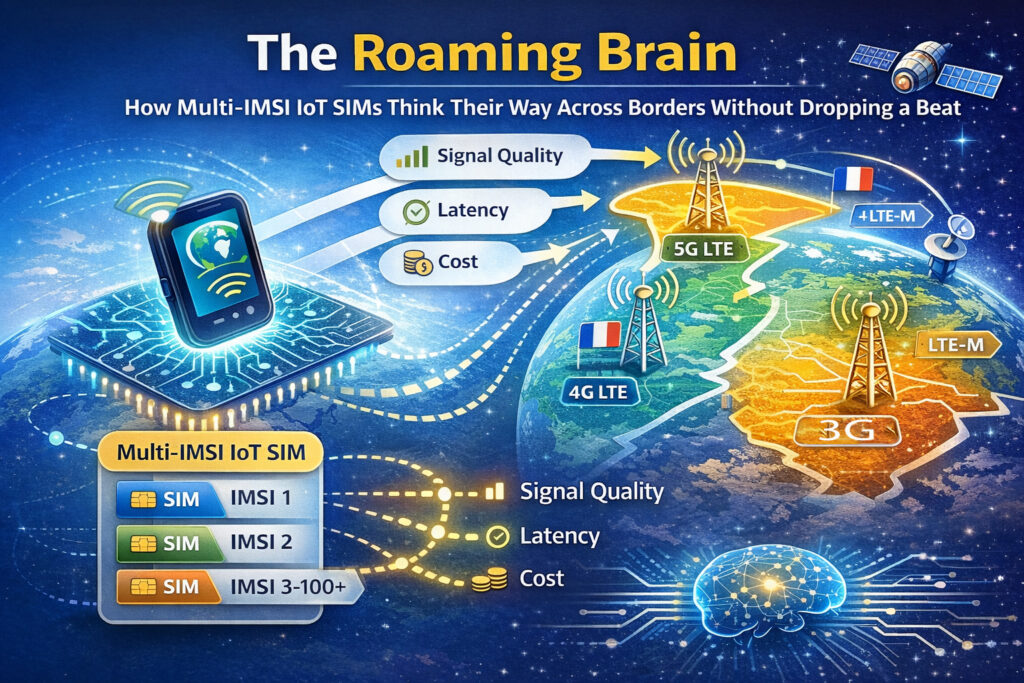
The Roaming Brain: How Multi-IMSI IoT SIMs Think Their Way Across Borders Without Dropping a Beat

In the world of IoT, devices are no longer anchored to a single place. They ride inside shipping containers, guide fleets across highways, monitor crops under shifting skies, and power machines on factory floors scattered across continents. To the outside world, this looks like seamless connectivity. Under the hood, however, something far more fascinating is happening.

Every time an IoT device connects to a network, it is making a decision. Not a human decision, but a digital one. Which tower should I trust? Which network will carry my data safely, quickly, and affordably right now? This invisible process is what gives rise to the idea of the “roaming brain” — the logic layer inside a multi-IMSI, multi-carrier no steering IoT SIM card that allows it to think its way across borders without ever missing a beat.

Let’s step inside that brain and explore how network logic, profile switching, and real-time decision-making keep global IoT deployments alive and alert.

The Problem with a Single Identity

Traditional SIM cards are born with a single IMSI, or International Mobile Subscriber Identity. This number ties the SIM to one home network, one carrier, and one identity in the global telecom ecosystem. When a device travels outside its home country, it roams. That roaming experience depends entirely on agreements between carriers.

At small scale, this works well enough. At global scale, it can become fragile. Coverage gaps appear in unexpected regions. Performance drops when a roaming agreement routes traffic through distant gateways. Costs spike when data takes a scenic route across international borders.

A single-IMSI SIM is like a traveler with one passport and a long list of visas. It can move, but only where it is allowed, and often not in the most efficient way.

Enter the Multi-IMSI Mind

A multi-IMSI IoT SIM is more like a traveler with a wallet full of passports. Each IMSI represents a different network identity, often tied to different carriers in different regions. Instead of being locked into one home network, the SIM can present itself as a local subscriber in multiple countries.

This is where the “brain” metaphor comes to life. The SIM, combined with the device firmware and the connectivity platform behind it, evaluates its environment and chooses which identity to use. The goal is simple in theory: connect to the best available network. In practice, that decision is shaped by a web of factors.

Signal strength, network availability, latency, cost rules, and policy controls all influence which profile becomes active. The result is a device that feels native wherever it lands, even if it crossed an ocean overnight.

How Devices See the World

When an IoT device powers on or loses its connection, it begins a scan. The radio module listens for nearby cell towers, measuring signal quality and identifying which networks are present. Each tower broadcasts a public identifier that tells the device which carrier it belongs to.

At this stage, the SIM steps in. It compares the detected networks against the list of profiles it can use. If the SIM has an IMSI that matches a local carrier, it can authenticate as a domestic subscriber rather than a roaming one.

This moment is a quiet negotiation. The device says, “Here is who I am.” The network replies, “Here is what I can offer.” If the handshake succeeds, data begins to flow.

To the application in the cloud, this entire exchange is invisible. The device simply appears online, as if it never left home.

Profile Switching in Motion

The real magic happens when conditions change.

Imagine a fleet vehicle crossing a border. On one side, it connects as a local subscriber using IMSI A. As it moves into the next country, that network fades and a new set of towers rises into view. The SIM recognizes that its current profile no longer provides the best option.

Depending on how the system is configured, the SIM can trigger a profile switch. This may happen through logic stored on the SIM itself or through instructions from a remote connectivity management platform.

The device briefly disconnects, rotates to a new IMSI, and re-authenticates on a different network. To the end user watching a dashboard, this may look like a momentary blip or nothing at all.

That seamlessness is the hallmark of a well-designed roaming brain.

Steering, No-Steering, and Trust

Not all roaming brains are built the same way.

Some multi-IMSI systems use what is called steering. In this model, the SIM or the backend platform directs the device toward preferred networks based on business rules. These rules might prioritize lower-cost carriers, stronger security postures, or contractual obligations.

Other systems follow a no-steering approach. Here, the device is free to attach to the strongest available network without being nudged toward a specific partner. This often results in better performance in remote or complex radio environments, where the “best” network can change minute by minute.

Trust becomes the central theme. Do you trust your business logic more, or the radio environment itself? The answer often depends on the use case.

For critical infrastructure or real-time applications, performance and reliability may outweigh cost optimization. For massive sensor deployments, predictability and budget control may take the lead.

The Role of the Connectivity Platform

The SIM’s brain does not work alone. Behind every intelligent IoT SIM strategy is a connectivity management platform that acts like a higher-level nervous system.

This platform collects data from millions of devices. It knows where they are, which networks they are using, how much data they consume, and how often they switch profiles. Over time, this information becomes a map of your global connectivity landscape.

With this map, operators can define policies. For example, devices in Region A should always prefer Network X unless signal strength falls below a certain threshold. Devices in Region B should avoid Network Y due to regulatory restrictions.

These policies can be pushed to devices remotely, shaping how their roaming brains behave without ever touching the hardware in the field.

Latency, Cost, and the Hidden Geography of Data

Choosing a tower is only part of the story. Where the data goes next matters just as much.

Some networks route roaming traffic back to a home country before sending it to the cloud. This can add latency and create unexpected data paths that complicate compliance with data residency laws.

Multi-IMSI strategies can reduce this detour. By connecting as a local subscriber, devices often gain access to local breakout points, sending data to nearby cloud regions instead of across continents.

The roaming brain is not just choosing a signal. It is choosing a route through the digital geography of the world.

When Things Go Wrong

Even the smartest brain needs a backup plan.

Networks fail. Towers go dark. Carriers experience outages. In these moments, the ability to fall back to another profile can be the difference between a minor inconvenience and a full-scale operational crisis.

A well-designed multi-IMSI SIM strategy includes rules for failure. If a connection drops repeatedly, the device can try a different network. If latency spikes beyond an acceptable range, it can switch profiles.

This kind of resilience is what allows global IoT systems to behave less like fragile chains and more like living organisms, adapting to their environment in real time.

Designing the Brain

Creating an effective roaming brain is as much about planning as it is about technology.

It starts with understanding where your devices will live, move, and operate. It continues with choosing connectivity partners that offer broad, reliable coverage and transparent management tools. It matures through testing in real-world conditions, not just lab environments.

The best strategies treat profile switching, network selection, and policy control as first-class design elements, not optional features.

The Future of Thinking SIMs

As eSIM and iSIM technologies become more widespread, the brain inside the device will grow even more flexible. Profiles will be downloaded and updated over the air. New networks will be added without physical intervention. Connectivity will become a living, evolving component of the device rather than a fixed part of its hardware.

In this future, the line between device and network will blur. Connectivity will feel less like a service and more like a sense.

The Final Connection

From the outside, a multi-IMSI IoT SIM looks like a small piece of plastic or a tiny chip soldered onto a board. Inside, it carries a remarkable responsibility.

It listens. It evaluates. It decides.

The roaming brain is what allows a device to cross borders, navigate networks, and keep data flowing as if the world were a single, seamless place. For organizations building global IoT systems, understanding how that brain works is not just a technical curiosity.

It is the key to designing connectivity that can think, adapt, and grow along with your ambitions.

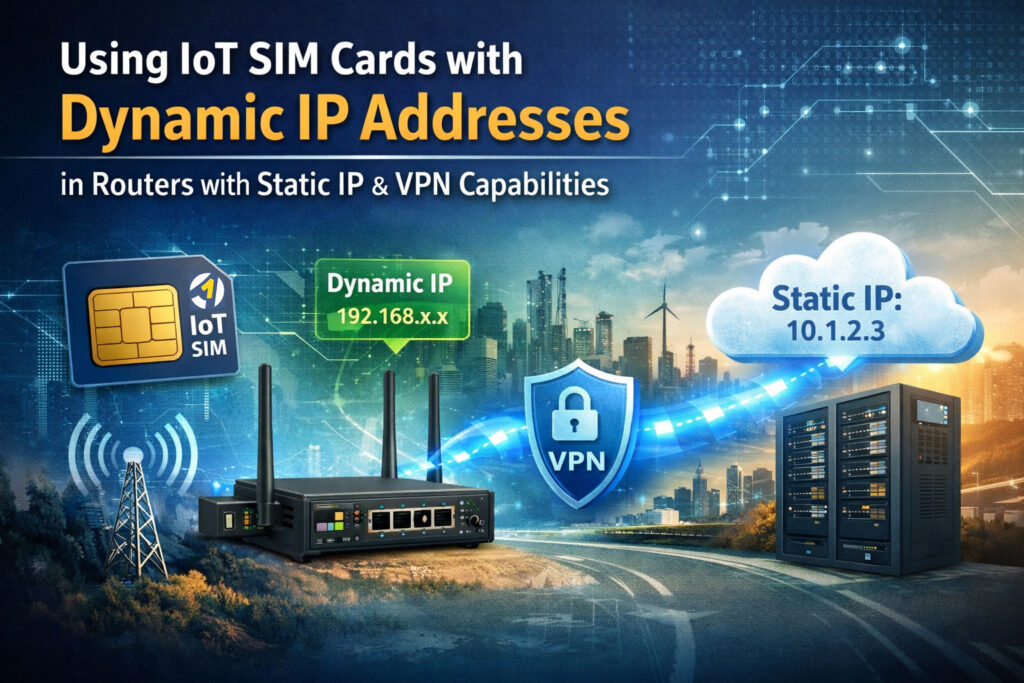
Using IoT SIM Cards with Dynamic IP Addresses in Routers with Static IP and VPN Capabilities

As IoT deployments continue to scale across industries, reliable and secure connectivity becomes just as critical as the devices themselves. From industrial controllers and smart meters to mobile routers in vehicles and remote monitoring systems, many IoT deployments rely on cellular routers powered by IoT SIM cards.

One common question arises early in the design phase:
How can devices using IoT SIM cards with dynamic IP addresses still achieve secure, stable, and manageable connectivity?

The answer lies in combining dynamic IP IoT SIMs with routers that support static IP mapping and VPN tunnels. This architecture offers flexibility, security, and scalability without the cost or complexity of provisioning static IPs on every SIM.

This article explains how dynamic IP IoT SIMs work, why they are commonly used, and how modern routers overcome their limitations using static IP and VPN technologies.


Understanding Dynamic IP Addresses in IoT SIM Cards

Most IoT SIM cards use dynamic private IP addresses by default. When a device connects to a mobile network, the carrier assigns it a temporary IP address, often behind carrier-grade NAT (CGNAT). This IP can change:

  • When the device reconnects
  • When it roams between networks
  • When sessions time out
  • When the carrier reassigns network resources

Dynamic IP addressing is widely used because it:

  • Conserves IPv4 address space
  • Reduces carrier costs
  • Improves scalability for large deployments
  • Simplifies SIM provisioning across regions

For outbound-only communication, such as sending telemetry data to the cloud, dynamic IP addresses pose little issue. Problems arise when inbound access, remote management, or persistent connections are required.


The Challenge: Inbound Access and Remote Management

IoT deployments often require:

  • Remote access to routers or devices
  • Secure device-to-cloud communication
  • Centralized monitoring and configuration
  • Predictable network endpoints
  • Compliance with security policies

With a dynamic IP and CGNAT, the device cannot be directly addressed from the public internet. This makes tasks such as remote diagnostics, firmware updates, or device control more complex.

Rather than assigning static public IPs to every SIM, which can be costly and limited in availability, most modern IoT architectures solve this at the router and network layer.


Routers with Static IP and VPN Capabilities

Industrial and IoT-grade cellular routers are designed specifically to work with dynamic IP SIMs. These routers support advanced networking features that effectively “neutralize” the limitations of dynamic IP addressing.

Key features include:

  • VPN client and server support
  • Persistent outbound tunnels
  • Static routing within private networks
  • Secure authentication and encryption
  • Integration with cloud platforms

By establishing an outbound VPN tunnel, the router creates a stable and secure virtual connection to a central server or cloud gateway, regardless of the SIM’s dynamic IP.


How VPNs Enable Static Connectivity over Dynamic IPs

The most common solution is an outbound-initiated VPN tunnel.

Here’s how it works:

  1. The router connects to the cellular network using a dynamic IP IoT SIM.
  2. The router initiates a VPN connection to a fixed endpoint (cloud server, data center, or corporate firewall).
  3. The VPN tunnel remains persistent, even if the SIM’s IP changes.
  4. All inbound and outbound traffic flows securely through the tunnel.
  5. The device appears as if it has a static, reachable address within the private VPN network.

Because the connection is outbound-initiated, it works seamlessly through CGNAT and across multiple mobile carriers.


Common VPN Technologies Used in IoT Routers

Modern IoT routers support several VPN protocols, each with different advantages:

IPsec VPN

  • Highly secure and widely supported
  • Common in enterprise and industrial environments
  • Ideal for site-to-site connectivity

OpenVPN

  • Flexible and firewall-friendly
  • Strong encryption
  • Easy to deploy across mixed environments

WireGuard

  • Lightweight and fast
  • Excellent performance on constrained devices
  • Increasingly popular in modern IoT deployments

GRE or L2TP (with encryption)

  • Useful for specific routing scenarios
  • Often combined with IPsec for security

The choice depends on security requirements, performance needs, and network architecture.


Static IP Mapping Inside the VPN

Once the VPN tunnel is established, the router and connected devices can be assigned static private IP addresses within the VPN.

This allows:

  • Consistent device addressing
  • Centralized firewall rules
  • Predictable routing
  • Easy integration with SCADA, cloud platforms, or enterprise systems

From the perspective of your application or management platform, the device always appears at the same IP address, even though the underlying cellular IP is dynamic and changing.


Benefits of Dynamic IP IoT SIMs with VPN-Enabled Routers

This architecture delivers several important advantages:

Cost Efficiency

Dynamic IP SIMs are more affordable and widely available than static IP SIMs, especially for global deployments.

Scalability

Easily scale to thousands or millions of devices without exhausting static IP resources.

Security

VPN encryption protects data in transit and isolates devices from the public internet.

Global Flexibility

Works seamlessly across multiple carriers, regions, and roaming scenarios.

Resilience

If the cellular network changes IPs or switches carriers, the VPN automatically re-establishes.


Real-World Use Cases

Industrial Automation

PLCs and controllers connect securely to centralized monitoring systems without exposing devices to the public internet.

Smart Infrastructure

Traffic systems, utilities, and smart meters use VPN tunnels for secure data collection and control.

Transportation and Fleet

Mobile routers in vehicles maintain persistent connectivity back to headquarters while roaming across regions.

Retail and Digital Signage

Remote management of displays and POS systems using private VPN addressing.

Energy and Utilities

Substations, solar farms, and wind turbines connect securely over cellular without static IP overhead.


When Is a Static IP IoT SIM Still Needed?

While VPN-based architectures cover most scenarios, static IP SIMs may still be required when:

  • Direct inbound connections are mandatory without VPN
  • Legacy systems cannot support VPNs
  • Regulatory requirements demand fixed public IPs
  • Third-party platforms require whitelisted IP addresses

Even in these cases, many organizations use hybrid models, reserving static IP SIMs for special endpoints while using dynamic IP SIMs with VPNs for the majority of devices.


Best Practices for Deployment

  • Choose IoT SIMs that support multi-network roaming for resilience
  • Use routers designed for industrial or IoT environments
  • Implement strong authentication and key management for VPNs
  • Monitor tunnel health and reconnect logic
  • Segment networks using VLANs or private subnets
  • Plan for over-the-air updates and remote diagnostics

Best Routers for Field IoT Sites with Dynamic IoT SIMs and Cloud VPN

Deploying IoT solutions in the field — whether that’s oil & gas sites, utility substations, remote signage, transportation hubs, or agricultural stations — throws a unique set of networking challenges at you:

  • Cellular connectivity with dynamic IP SIMs (no static public IP)
  • Secure, persistent remote access
  • Hard-to-reach physical locations
  • Harsh environments and uptime expectations
  • Remote management without local IT support

The best way to satisfy all these needs is a field-ready cellular router that supports:
✔ native VPN client capabilities (IPsec, OpenVPN, WireGuard)
Cloud management dashboards (for remote monitoring)
Cellular uplinks via LTE/5G from IoT SIM cards
Auto VPN reconnection even if the SIM IP changes

Below are excellent router choices rated specifically for field deployments and cloud/VPN readiness.


🛠️ 1. Peplink Balance and MAX Series

Best for rugged field sites with multi-WAN and advanced VPN features

Why they’re field winners:
🔹 Peplink MAX BR1 Mini LTE Router – Rugged cellular router with strong VPN support (SpeedFusion). Great for single-site field IoT with fallback to multiple carriers.
🔹 Peplink Balance One – Desktop/edge unit if you have bigger LAN sites with wired + cellular redundancy.
🔹 Peplink MAX HD2 IP55 – Weather-resistant industrial unit (IP55) built for outdoor cabinets, substations, and long-term field installs.
🔹 Peplink Transit Duo LTE Router – Dual cellular for carrier redundancy, strong VPN failover, excellent in transportation or mobile field use.

Key strengths:

  • Peplink’s SpeedFusion VPN for resilient encrypted tunnels that auto-heal when IP changes.
  • Centralized cloud management via InControl2.
  • Excellent field reliability and failover logic.

Good fit for: solar farms, remote utilities, public safety, ITS (intelligent transportation systems).


🚀 2. Sierra Wireless AirLink Routers

Enterprise-grade cellular with robust VPN and remote management

Why field engineers love them:
🔹 AirLink LX60 – Compact yet rugged, ideal for simple field sites.
🔹 AirLink MP70 – Premium 5G/4G multi-carrier support, advanced VPN options.
🔹 AirLink ES4400 – Highly modular and IoT-optimized with exceptional security features.

Key strengths:

  • Built-for purpose cellular with carrier agnostic VPN support
  • AirLink Management Service (ALMS) and AirVantage cloud dashboards
  • Excellent remote diagnostics and scripting APIs

Good fit for: edge sites that demand security, carriers with roaming SIMs, and mission-critical infrastructure.


📡 3. Cradlepoint Enterprise Routers

Carrier-certified routers with advanced VPN and cloud control

Field deployment benefits:
🔹 IBR1700 – Great balance of price, performance, and ruggedization.
🔹 E3000 Series – Powerful compute, ideal when running local VPN concentrators or edge processing.
🔹 R1900 – Field-proven platform with strong security posture.

Key strengths:

  • NetCloud Service cloud portal for remote provisioning, monitoring, and VPN orchestration
  • Support for IPsec, OpenVPN, GRE, and cloud-based L2TP tunnels
  • Excellent cellular performance and fallback logic

Good fit for: enterprise IoT sites, distributed AGVs, fleet backhaul, industrial plants.


💡 4. Cisco Industrial & Secure Rugged Routers

For industrial environments with strict security and uptime requirements

Why they matter:
Cisco brings enterprise-grade routing to rugged contexts with strong encryption and segmentation support.

Key strengths:

  • Hardware built for high vibration, temperature, and industrial environments
  • Support for robust VPN options (IPsec, DMVPN with cloud controllers)
  • Integration with Cisco DNA Center for unified cloud management

Good fit for: mission-critical infrastructure, factories, and regulated environments.


⚡ 5. Rugged IoT Gateway Options (Multi-Protocol + VPN)

These gateways aren’t just routers — they blend protocol gateways (Modbus, OPC UA) with cellular and VPN:

Highlights:

  • Protocol bridging for SCADA/PLC environments
  • Solid VPN support for cloud-tunneled backhaul
  • Rugged hardware specs for outdoor/industrial deployments

Good fit for: utilities, oil & gas, manufacturing edge points with protocol translation needs.


What Makes a Router Field-Ready for IoT

To nail deployments where IoT SIM cards have dynamic IP addresses, look for:

🔹 Persistent VPN Support

Routers must natively support:

  • IPsec
  • OpenVPN
  • WireGuard
  • SpeedFusion / Cloud VPN tunnels

This lets you maintain a stable encrypted tunnel back to your central network no matter how the SIM’s cellular IP changes.

🔹 Cloud-Managed Control

Central dashboards let you:
✔ push configs remotely
✔ monitor VPN health
✔ handle SIM/firmware updates
✔ automate alerts

Cloud portals reduce physical truck rolls.

🔹 Cellular First Design

Industrial routers offer:
📶 Multi-band LTE/5G
👷‍♀️ Rugged casing / wide temp range
🔗 Failover logic
📜 Remote diagnostics

All crucial where connectivity is literally your mission backbone.


Why Dynamic IP SIMs are Perfect with Cloud VPN Routers

Dynamic IP addresses are cheap, global, and scale fast. The typical gotcha is that inbound access is blocked by carrier NAT. But if your field router initiates a VPN connection out to a fixed cloud endpoint, you get:

✨ Stable addressing within your private VPN
🔐 Encrypted secure transport
📍 Access from anywhere without static IP SIM costs
📈 Easier fleet-wide monitoring & control

This pattern is the de-facto standard for IoT at scale.


Quick Comparison Matrix

Router ClassBest ForVPNCloud MgmtRugged
Peplink MAXField sites & mobileExcellent (SpeedFusion + IPsec/OpenVPN)InControl2✔️✔️
Sierra AirLinkEnterprise cell edgeStrong (IPsec/OpenVPN)ALMS/AirVantage✔️✔️
CradlepointDistributed enterpriseExcellent (multi-VPN)NetCloud✔️✔️
Cisco IndustrialHigh security deploymentsStrong (IPsec/DMVPN)Cisco DNA✔️✔️✔️
IoT GatewaysProtocol edgesGoodVaries✔️✔️✔️

How to Architect Field Sites with Dynamic IP SIMs

  1. SIM & Data Plan
    Use an IoT SIM with global coverage and sufficient APN/data throughput.
  2. Router Configuration
    • Set up VPN client to central VPN server (cloud or DC).
    • Configure auto-reconnect and heartbeat intervals.
    • Optionally enable local firewall/VLAN segmentation.
  3. Central VPN Endpoint
    • Cloud VPN concentrator (e.g., AWS/Azure VPN gateway, Peplink FusionHub, Cisco ASA)
    • Assign static private IPs within the VPN space for each site.
  4. Monitoring
    • Use cloud dashboards for uptime, SIM signal quality, data usage, and alerts.
  5. Security Hardened
    • Strong keys/certificates
    • Segmented networks
    • Least-privilege policies

Final Thoughts

Dynamic IP addressing is not a limitation in modern IoT architectures. When paired with routers that support static IP mapping and VPN connectivity, dynamic IP IoT SIM cards become a powerful, secure, and scalable foundation for global deployments.

This approach delivers the best of both worlds: the flexibility and cost efficiency of dynamic IP SIMs, combined with the stability, security, and manageability of static addressing through VPNs.

As IoT deployments grow in size and complexity, this architecture has become the de facto standard for secure, always-on connectivity in the connected world.

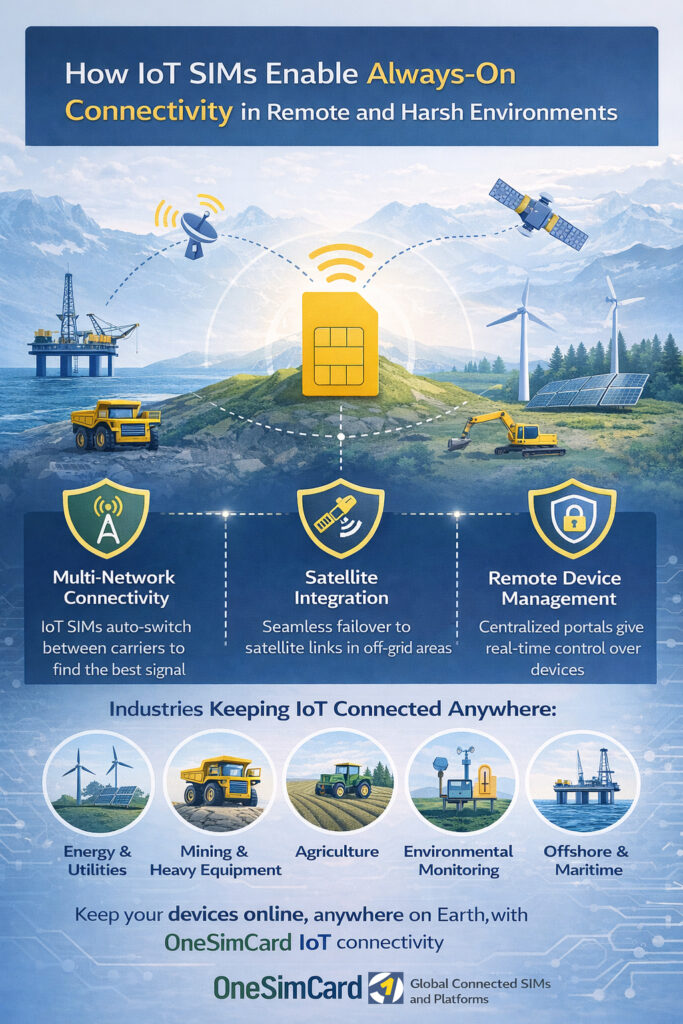
How IoT SIMs Enable Always-On Connectivity in Remote and Harsh Environments

IoT SIM Cards working in harsh conditions

Keeping Critical Systems Connected Where Traditional Networks Fail

From offshore oil rigs and wind farms to deserts, mountains, and polar research stations, many of today’s most important operations take place far beyond the reach of traditional connectivity. In these remote and harsh environments, reliable communication isn’t a convenience—it’s a necessity. Equipment must remain online, data must flow continuously, and downtime can mean safety risks, regulatory violations, or millions of dollars in losses.

This is where IoT SIM cards play a crucial role. Purpose-built for machine connectivity, IoT SIMs provide the resilient, secure, and flexible communication layer required to keep devices connected—no matter how extreme the conditions.


🌍 The Connectivity Challenge in Remote Environments

Remote environments introduce unique challenges that standard consumer connectivity simply isn’t designed to handle:

  • Sparse or inconsistent network coverage
  • Extreme temperatures (heat, cold, humidity)
  • Limited physical access for maintenance
  • Unreliable power sources
  • Moving assets (ships, vehicles, equipment)
  • Harsh physical conditions (dust, vibration, corrosion)

In these scenarios, even brief connectivity gaps can disrupt operations. For industries such as energy, mining, agriculture, transportation, defense, and environmental monitoring, always-on communication is mission-critical.


📶 Why Consumer SIMs Fail in Harsh Conditions

Consumer SIM cards are built for people, not machines. They typically rely on:

  • A single carrier
  • Network steering, which may lock devices to suboptimal signals
  • Dynamic IP addressing
  • Short lifecycle expectations
  • Minimal remote management capabilities

In remote areas, this leads to frequent dropouts, roaming restrictions, and a lack of control when things go wrong. Once deployed, consumer SIMs often require physical intervention—an unrealistic expectation for devices located hundreds of miles away.


🔑 What Makes IoT SIMs Different?

IoT SIM cards are engineered specifically for global, long-term, and unattended device connectivity. They are designed to withstand environmental extremes and network variability while providing constant communication.

Key capabilities include:

  • Multi-network and multi-IMSI connectivity
  • Non-steered network selection
  • Global roaming without restrictions
  • Extended temperature tolerance
  • Long operational lifespan (10+ years)
  • Remote provisioning and management
  • Enterprise-grade security features

These features work together to ensure devices stay online—even when conditions are unpredictable.


🔄 Multi-Network Connectivity: The Foundation of Always-On IoT

One of the most important advantages of IoT SIMs is multi-network connectivity. Instead of relying on a single carrier, IoT SIMs can connect to multiple mobile networks within a region or country.

Why this matters in remote environments:

  • If one network degrades or goes offline, the device automatically switches to another
  • Coverage gaps are minimized
  • Connectivity adapts dynamically as conditions change

With non-steered IoT SIMs, devices choose the strongest available signal rather than being forced onto a preferred carrier. This is especially critical in rural or rugged areas where network quality can fluctuate dramatically.


🛰️ Extending Reach with Hybrid Connectivity

In extremely remote locations—such as oceans, deserts, or mountainous regions—cellular coverage may be intermittent or nonexistent. Many IoT deployments combine cellular IoT SIMs with satellite connectivity to ensure uninterrupted communication.

In hybrid setups:

  • Cellular networks are used whenever available
  • Satellite connectivity provides fallback coverage
  • Data transmission continues seamlessly, even outside terrestrial coverage zones

This approach is widely used in maritime shipping, oil and gas exploration, environmental research, and emergency response systems.


🔐 Secure Communication in Uncontrolled Environments

Remote deployments are often exposed to higher security risks due to limited physical oversight. IoT SIMs provide built-in security measures that protect devices and data even in uncontrolled environments.

These include:

  • Private APNs that isolate traffic from the public internet
  • Private static IPs for predictable, secure routing
  • VPN and IPsec tunnels for encrypted communication
  • SIM-to-device binding (IMEI locking) to prevent misuse
  • Closed-loop network routing

This ensures sensitive data—such as operational metrics, sensor readings, or safety alerts—remains protected from interception or tampering.


🧭 Centralized Control from Anywhere

Managing remote devices is only possible if connectivity can be monitored and controlled remotely. IoT SIM management platforms provide centralized visibility into every deployed device, regardless of location.

With a single dashboard, organizations can:

  • Monitor connectivity status in real time
  • Track data usage and session history
  • Receive alerts when devices go offline
  • Suspend or reactivate SIMs instantly
  • Apply configuration changes remotely
  • Integrate with enterprise systems via APIs

This level of control dramatically reduces the need for costly site visits and enables proactive maintenance.


🏭 Real-World Use Cases in Harsh Environments

Energy and Utilities

Wind turbines, solar farms, pipelines, and substations are often located in remote areas. IoT SIMs enable continuous monitoring of performance, safety, and maintenance needs—preventing outages and improving efficiency.

Mining and Construction

Heavy machinery operates in dusty, high-vibration, and extreme-temperature environments. Connected sensors powered by IoT SIMs transmit health data and location information to prevent equipment failure and improve safety.

Agriculture

Smart irrigation systems, soil sensors, and livestock trackers rely on IoT SIMs to operate across vast rural areas with limited infrastructure—ensuring crops and animals are monitored around the clock.

Maritime and Offshore Operations

Ships, platforms, and containers remain connected at sea using IoT SIMs with satellite fallback, enabling asset tracking, environmental monitoring, and compliance reporting.

Environmental Monitoring

Weather stations, seismic sensors, and wildlife tracking devices are deployed in some of the harshest conditions on Earth. IoT SIMs allow scientists to collect real-time data without constant human presence.


🧠 Designed for Long Lifecycles

Remote devices are often installed with the expectation that they will operate for many years without physical intervention. IoT SIMs are built for this reality.

Features such as:

  • Industrial-grade durability
  • Extended temperature ranges
  • Over-the-air profile updates

ensure that connectivity evolves without replacing hardware—even as networks change over time.


⚙️ The OneSimCard IoT Advantage

OneSimCard IoT delivers global connectivity solutions purpose-built for remote and harsh environments, including:

  • Coverage in 200+ countries and territories
  • Access to 300+ carrier networks
  • Multi-IMSI, non-steered IoT SIMs
  • Private APN, VPN, and static IP options
  • Centralized SIM management portal
  • Satellite integration support
  • Long-lifecycle SIM solutions

Whether devices are deployed in deserts, oceans, mountains, or industrial zones, OneSimCard IoT ensures they remain securely connected—anywhere, anytime.


🚀 Conclusion: Connectivity Without Compromise

Remote and harsh environments no longer have to mean unreliable communication. With the right IoT SIM strategy, organizations can achieve always-on connectivity, real-time visibility, and enterprise-grade security—no matter where their devices operate.

IoT SIMs are more than just connectivity—they are the foundation that allows modern infrastructure, energy systems, logistics networks, and scientific research to function where traditional networks cannot.

In the most challenging environments on Earth, IoT SIMs keep your devices talking—when it matters most.

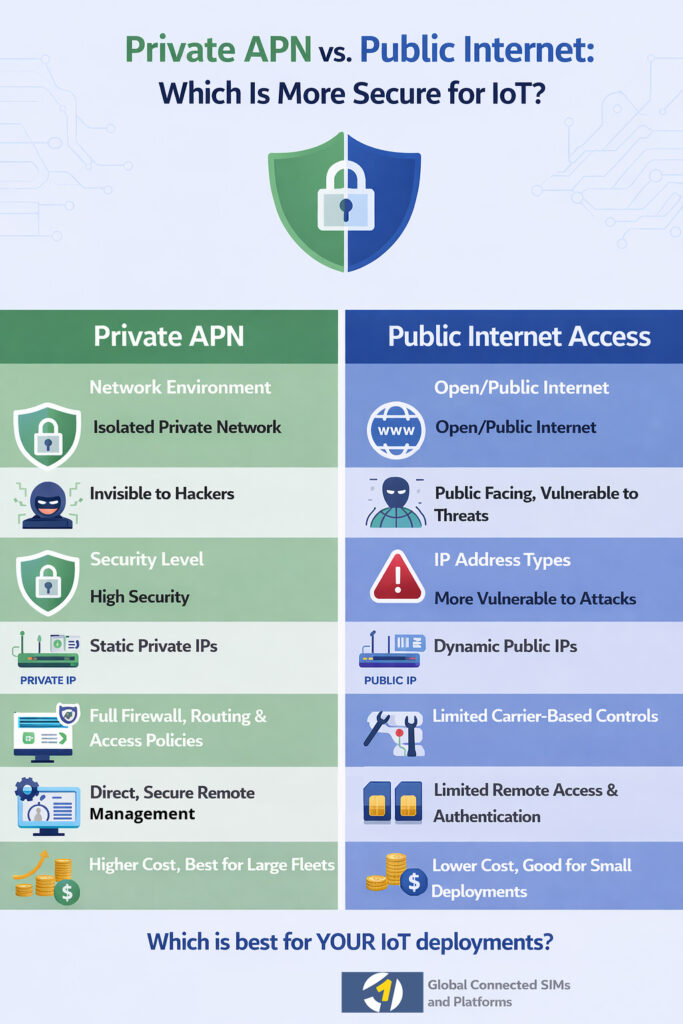
Private APN vs. Public Internet Access: What’s Best for IoT Security?

Understanding the Network Choices That Shape IoT Reliability, Safety, and Performance

As IoT deployments scale across industries — from connected medical devices to smart meters and autonomous vehicles — the security of device communications becomes one of the most important infrastructure decisions an organization must make. At the heart of this decision lies a key question:
Should your IoT devices communicate over the public internet using standard mobile data, or should you deploy a Private APN for controlled, secure connectivity?

Both environments have strengths, but the differences matter — especially when dealing with mission-critical or sensitive data. Understanding how each option works, and the risks and benefits associated with them, will help you choose the right foundation for your IoT ecosystem.


🌐 What Is Public Internet Access for IoT Devices?

When IoT devices use a standard mobile data connection, they operate just like any smartphone or tablet: they connect to the public internet through a mobile network operator’s (MNO’s) infrastructure.

Advantages of Public Internet Access:

  • Easy to deploy — no special setup required
  • Cost-effective for small or non-critical deployments
  • Globally compatible with minimal technical configuration
  • Fast to scale for testing or early-stage rollouts

However, because traffic flows through the public internet, devices become more vulnerable to several risks, including:

  • Exposure to public IP ranges, which makes them discoverable
  • Higher risk of malware, spoofing, SIM hijacking, and DDoS attacks
  • Greater dependency on the MNO’s shared network environment, offering less control
  • Difficulty enforcing strict firewall or routing policies across fleets

For many consumer IoT deployments this setup can still be appropriate, but for enterprise IoT — especially in industries like healthcare, energy, transportation, and government — public connectivity often introduces unacceptable security gaps.


🛡️ What Is a Private APN?

A Private Access Point Name (Private APN) gives enterprises their own dedicated gateway into a mobile network. Instead of devices connecting to the open internet, they connect to a private, isolated network environment that only your organization controls.

Think of it as a secure tunnel carved inside the mobile network operator’s infrastructure.

How It Works:

  • Devices connect using a private APN identifier
  • All data routes through segregated gateways, not the public internet
  • Traffic can be directed into your corporate network, cloud environment, or VPN
  • Devices typically receive private (non-routable) IPs
  • Firewalls, routing rules, and access policies become fully customizable

A Private APN is essentially your private network in the cloud, with mobile connectivity as its backbone.


🔒 Security Benefits of Private APN for IoT

When protecting IoT devices from external threats, a Private APN offers multiple layers of hardened security. For mission-critical applications, this can be the difference between stable uptime and catastrophic vulnerability.

1. Devices Become Invisible to the Public Internet

Most cyberattacks begin with network scanning and enumeration.
With a Private APN:

  • Devices cannot be scanned
  • They cannot be directly reached from outside networks
  • Attackers have no entry point to probe

This reduces the threat surface dramatically.

2. Controlled, Encrypted Tunnels (VPN / IPsec / GRE)

Private APNs typically integrate with:

  • IPsec tunnels
  • Private VPNs
  • Cloud interconnects (AWS, Azure, GCP)

This ensures that data travels through secure, encrypted channels from device to backend — never in the open.

3. Custom Firewall, ACL, and Routing Policies

Instead of relying on a mobile carrier’s general-purpose security, you can define:

  • Whitelisted IP ranges
  • Layer-3 and Layer-7 firewall rules
  • Device-to-device communication policies
  • Traffic shaping, filtering, and monitoring rules

This level of control is impossible with public internet access.

4. Private Static IPs for Secure Device Management

Private APNs allow each IoT device to receive a private, fixed IP address, enabling:

  • Device authentication
  • Secure remote management
  • Predictable asset routing
  • Cloud-based command and control

In contrast, public connectivity typically assigns dynamic, carrier-NATed IPs with limited remote-access options and higher security risks.

5. Better Protection Against SIM-Based Attacks

With a Private APN environment, you can enforce:

  • IMEI-locking
  • SIM-to-device binding
  • Closed-loop routing
  • Access limiters (aka IP Filtering)

These policies greatly reduce risks like SIM cloning, SIM swapping, or unauthorized usage.


🏢 Why Enterprises Prefer Private APNs for IoT at Scale

As IoT fleets grow into the thousands or millions of devices, enterprises need to guarantee not only security but also operational control and network predictability.

Private APNs provide:

Centralized oversight and uniform policy enforcement

Security and network rules apply instantly across all devices — no matter where they are located globally.

Higher uptime and stability

Private routes avoid public internet congestion and lower latency variability.

Improved compliance posture

For industries regulated by HIPAA, GDPR, SOC2, or NERC-CIP, private traffic flows simplify compliance by keeping data segmented and auditable.

Seamless integration with corporate IT infrastructure

A Private APN acts like an extension of your internal network — making IoT part of your enterprise architecture rather than an isolated environment.


⚖️ Private APN vs. Public Internet for IoT: Quick Comparison

FeaturePublic Internet AccessPrivate APN
Security LevelModerate (shared network)High (isolated and private)
Device ExposurePublic-facing IPsNot exposed to internet
ManagementLimited controlFull policy, routing & firewall control
ScalabilityGood for small fleetsBest for medium-to-large fleets
ComplianceHarder to meet strict standardsEasier to secure & audit
CostLowerHigher but justified for enterprise-grade security

🧭 When Should You Choose a Private APN?

A Private APN is ideal when:

  • Devices transmit sensitive data (healthcare, government, finance)
  • Uptime is mission-critical (utilities, EV charging, industrial automation)
  • Devices run in remote or hostile environments
  • You manage hundreds or thousands of IoT endpoints
  • Direct device access or remote management is required
  • Compliance and audit trails matter

If security, reliability, and centralized control are top priorities, a Private APN will always outperform public internet access.


🚀 The OneSimCard IoT Advantage

OneSimCard IoT provides robust connectivity solutions tailored for enterprise IoT security, including:

  • Private APN options with custom IP ranges
  • Private static IPs and secure VPN tunnels
  • Multi-IMSI global IoT SIM cards for maximum uptime
  • Non-steered connectivity to ensure the strongest network at all times
  • International coverage across 200+ countries
  • Advanced SIM management portal for real-time monitoring and control

With OneSimCard IoT, your devices operate inside a secure, isolated, enterprise-grade environment — ensuring your IoT data stays protected from the first packet to the last.


🔚 Final Thoughts

As IoT continues to shape industries around the world, the network environment you choose will directly impact your security, reliability, and operational costs. Public internet access can work for small-scale or low-risk deployments, but when your IoT infrastructure becomes mission-critical, the benefits of a Private APN become undeniable.

Private APN = security, visibility, and control.
Public Internet = convenience and quick deployment.

For enterprises serious about IoT security, the choice is clear.

AI Meets IoT: Smarter Decisions Powered by SIM-Enabled Data

AI and IoT SIM cards work together to make better, faster decisions.

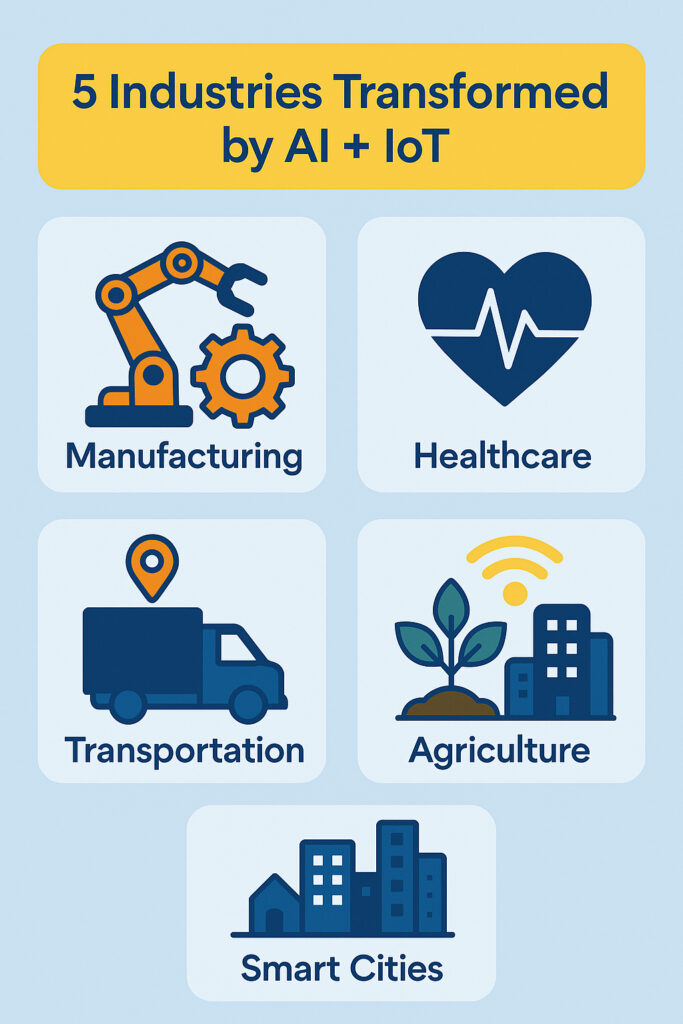
The world is becoming more connected than ever — not just through people and devices, but through intelligent systems that think, learn, and act. The synergy between Artificial Intelligence (AI) and the Internet of Things (IoT) is reshaping industries across the globe, giving rise to what experts call the Artificial Intelligence of Things (AIoT).

At the heart of this transformation lies a crucial enabler: the IoT SIM card. These small but powerful components ensure every sensor, camera, vehicle, and machine can transmit data securely and reliably across borders. Combined with AI, SIM-enabled IoT connectivity turns raw data into actionable insights that save time, reduce costs, and improve performance.

Let’s explore how AI and IoT together — powered by reliable global SIM connectivity — are unlocking smarter decisions across industries.


The AI + IoT Connection

The Internet of Things connects the physical world to the digital one. Billions of sensors and devices collect real-time data about temperature, movement, pressure, health, energy, and more. But without intelligence, this data is just noise.

Enter Artificial Intelligence.

AI algorithms analyze the massive volumes of data generated by IoT devices, identify patterns, and predict outcomes. When these technologies converge, they create AIoT ecosystems capable of independent decision-making. Machines no longer just report problems — they can anticipate them, respond autonomously, and even optimize performance in real time.

The result? Smarter operations, higher efficiency, and reduced costs.

But this intelligence depends on seamless, always-on connectivity — exactly what IoT SIM cards provide.


Why SIM-Enabled Connectivity Matters

A SIM card may seem like a small component, but it’s the essential link between IoT devices and the cloud-based AI engines that process their data.

Here’s why the type of SIM you choose makes a huge difference:

  • Multi-Network Access: IoT SIMs, especially no-steering types, automatically connect to the strongest network available. That ensures uninterrupted data flow, even in remote or cross-border environments.
  • Global Coverage: A single IoT SIM profile can connect devices in 200+ countries, enabling truly global AIoT deployments.
  • Security: IoT SIMs provide encrypted connections, private static IPs, and VPN options, keeping data safe during transmission.
  • Scalability: From hundreds to millions of devices, SIM-enabled connectivity scales effortlessly.

Without dependable data transmission, AI systems can’t make accurate, timely decisions. IoT SIMs are the invisible infrastructure that keeps the AIoT ecosystem running.


1. Smarter Manufacturing and Predictive Maintenance

In manufacturing, IoT sensors continuously monitor machinery performance — tracking vibration, temperature, and output levels. AI analyzes these streams of SIM-enabled data to predict when a component is likely to fail.

This predictive maintenance model reduces downtime, saves maintenance costs, and extends equipment life.

For example:

  • A factory might detect subtle changes in motor vibration, prompting maintenance before breakdowns occur.
  • AI systems learn over time which anomalies indicate real problems, further refining predictions.

The financial impact is huge. A McKinsey study found that AI-driven predictive maintenance can reduce equipment downtime by up to 50% and increase asset lifespan by 20–40%.

The glue holding this together? Reliable IoT SIM connectivity that ensures data reaches the AI platform without delay or loss.


2. Connected Vehicles and Smart Transportation

Modern vehicles are rolling computers equipped with hundreds of sensors. They depend on IoT SIM cards to transmit telematics data — location, engine health, driver behavior, and more — back to central AI systems.

AI then uses that data to:

  • Optimize routes and fuel consumption.
  • Detect unsafe driving patterns in real time.
  • Predict and prevent mechanical issues before they cause accidents.

In logistics fleets, AI uses SIM-enabled IoT trackers to monitor deliveries, estimate arrival times, and reroute vehicles instantly in case of traffic or weather disruptions.

This combination of connectivity and intelligence reduces fuel costs, improves safety, and keeps goods moving efficiently across borders.


3. Smarter Cities and Infrastructure

AI and IoT together are redefining urban living. With IoT SIM cards embedded in smart meters, streetlights, parking systems, and public transit, cities collect data about usage and energy patterns.

AI then analyzes this data to make smarter decisions:

  • Energy Management: Adjusting streetlight brightness based on real-time foot traffic saves millions in electricity costs.
  • Traffic Optimization: AI analyzes SIM-enabled vehicle and sensor data to reduce congestion and emissions.
  • Public Safety: Connected surveillance and emergency systems detect unusual behavior or hazards instantly.

By linking every sensor through IoT SIM connectivity, cities move closer to the dream of sustainable, efficient, citizen-friendly environments.


4. Healthcare and Remote Monitoring

Few industries benefit from AI + IoT as much as healthcare. From wearable devices that track heart rate and oxygen levels to hospital equipment that communicates automatically, SIM-enabled IoT ensures medical data flows securely to cloud-based AI systems.

AI analyzes patient data in real time to:

  • Detect anomalies or early warning signs.
  • Alert medical staff automatically.
  • Personalize treatments based on historical trends.

For patients in remote regions, an IoT SIM card allows devices to transmit critical data even where Wi-Fi is unavailable. This can literally be life-saving connectivity.


5. Smart Agriculture and Environmental Monitoring

Farming has become a data-driven science. IoT sensors monitor soil moisture, temperature, nutrient levels, and weather. AI interprets this SIM-transmitted data to recommend when to water, fertilize, or harvest.

This combination helps farmers:

  • Optimize resource usage (water, fertilizer, energy).
  • Increase yields while reducing costs.
  • Detect crop diseases early.

In large-scale agriculture and environmental monitoring, IoT SIMs provide wide-area coverage where traditional internet access doesn’t exist — keeping critical data flowing from the field to the cloud.


6. Energy, Utilities, and Grid Optimization

Utilities use IoT SIM-connected meters and sensors to track consumption and detect faults in real time. AI analyzes this information to:

  • Balance loads across the grid.
  • Predict peak usage patterns.
  • Prevent energy theft and outages.

Combined with renewable energy data, AI systems can make smart grid decisions autonomously — redirecting energy from solar farms or wind turbines to where it’s needed most.

Reliable IoT SIM connectivity ensures the data that powers these AI decisions is delivered continuously and securely.


The Economic Impact of AIoT

When you combine IoT’s reach with AI’s analytical power, the economic potential is enormous. According to PwC, AI could contribute up to $15.7 trillion to the global economy by 2030, while McKinsey estimates IoT will add $4–11 trillion annually by 2025.

Businesses that integrate both technologies — and support them with the right SIM-based connectivity — enjoy faster decision-making, lower operational costs, and new revenue streams.

From predictive insights and automation to efficiency and sustainability, AIoT drives measurable ROI across nearly every industry.


The Role of OneSimCard IoT in AI-Driven Connectivity

At OneSimCard IoT, we understand that the success of AI-powered IoT deployments hinges on reliable, global, and secure connectivity. Our IoT SIM solutions are purpose-built to support AIoT systems at scale:

  • Global, Multi-Network Access: 350+ networks across 200+ countries.
  • No-Steering Technology: Devices automatically connect to the strongest available signal.
  • Scalable Management Portal: Monitor data usage, manage SIMs, and deploy devices worldwide.
  • Advanced Security: Private static IPs, VPN options, and encrypted data channels.
  • Flexible Plans: Pooled and pay-as-you-go models for cost efficiency.

By keeping your devices online, your data secure, and your operations flexible, OneSimCard IoT helps organizations harness the full power of AI-driven IoT ecosystems.


Final Thoughts

The future belongs to companies that connect intelligence with action — AI with IoT. But intelligence is only as powerful as the data behind it.

With SIM-enabled IoT connectivity, every device becomes a source of insight, every decision becomes faster, and every operation becomes smarter. Together, AI and IoT are not just transforming industries — they’re redefining how the world works.

OneSimCard IoT: Smarter Connectivity for Smarter Decisions.

How Artificial Intelligence and IoT SIM Cards Work Together

The Internet of Things (IoT) has already changed how industries, cities, and people operate. Billions of devices now connect seamlessly across borders—from smart meters and fleet trackers to wearable medical devices and industrial sensors. At the same time, Artificial Intelligence (AI) is transforming how we process and make sense of this data. But what truly brings these two worlds together is connectivity—and that’s where IoT SIM cards play a pivotal role.

In this blog, we’ll explore how AI and IoT SIM cards work hand-in-hand to power the next wave of digital transformation, why global connectivity matters, and how businesses can prepare for an AI-driven IoT future.


The Role of IoT SIM Cards in Connected Devices

At its core, an IoT SIM card functions much like the SIM card in your smartphone. However, it is designed for machines rather than people. These specialized SIMs connect IoT devices to mobile networks, enabling real-time data transmission across countries and carriers.

Unlike consumer SIM cards, IoT SIM cards offer:

  • Multi-carrier redundancy: Devices can switch between multiple networks for reliability.
  • Scalability: Thousands of SIMs can be managed from a centralized portal.
  • Global reach: Coverage in 200+ countries, essential for cross-border IoT projects.
  • Advanced features: Private APNs, static IP options, pooled data plans, and remote provisioning.

This connectivity forms the digital bloodstream for IoT deployments—allowing sensors, vehicles, and devices to constantly feed data into larger systems.


The Explosion of IoT Data

The rise of IoT has created an avalanche of raw data. IDC estimates that IoT devices will generate more than 73 zettabytes of data annually by 2025. Without proper processing, this massive volume of information is little more than noise.

Side-by-side comparison demonstrating the explosion of IoT data

Here’s where AI enters the picture. AI systems are uniquely capable of digesting, analyzing, and learning from these streams of information. By pairing AI with IoT SIM card connectivity, businesses can not only collect data but also transform it into actionable insights in real time.


How Artificial Intelligence Amplifies IoT

AI complements IoT in three critical ways:

1. Real-Time Decision Making

An IoT SIM card ensures data travels securely from the device to the cloud or an edge computing node. AI then processes this data instantly, enabling real-time responses. For example:

  • A fleet tracking system can use AI to reroute trucks away from traffic congestion based on live GPS and weather data.
  • A smart factory can automatically shut down a malfunctioning machine before it causes downtime or injury.

2. Predictive Analytics

By studying historical data collected through IoT SIM cards, AI can anticipate future behavior. This predictive power drives:

  • Predictive maintenance in manufacturing and energy sectors.
  • Smart agriculture, where AI forecasts crop yields and suggests irrigation cycles.
  • Healthcare monitoring, where wearables can warn of potential medical emergencies.

3. Automation at Scale

AI doesn’t just analyze data—it acts on it. Combined with IoT SIM cards, this enables automated responses at scale:

  • Smart energy grids can balance electricity demand automatically.
  • Retail supply chains can restock based on predictive models.
  • Smart cities can manage traffic lights dynamically to improve flow and reduce emissions.

Why IoT SIM Cards Are Essential for AI in IoT

While AI algorithms are powerful, they are only as good as the data they receive. Without secure, reliable, and global connectivity, even the smartest AI systems fall short. IoT SIM cards enable:

  • Consistent connectivity across borders, essential for global IoT deployments.
  • Secure data transmission, reducing vulnerabilities that could compromise AI systems.
  • Device mobility, allowing AI to function on-the-go (connected cars, smart logistics).
  • Scalable rollouts, so businesses can expand from dozens to thousands of devices without losing control.

Real-World Examples of AI + IoT SIM Synergy

  1. Connected Cars and Autonomous Vehicles
    IoT SIM cards keep vehicles connected to 4G/5G networks, feeding live data about traffic, road conditions, and mechanical health. AI then processes this information to power driver-assist features, route optimization, and predictive maintenance.
  2. Healthcare Wearables
    From heart monitors to glucose trackers, wearables rely on IoT SIM cards for reliable data transmission—even in remote areas. AI analyzes this data to detect anomalies and alert healthcare providers in real time.
  3. Smart Agriculture
    IoT-enabled sensors track soil moisture, weather, and crop health. AI turns this into actionable insights, suggesting the best times for planting, fertilizing, or irrigating. IoT SIMs ensure farmers stay connected, even in rural areas.
  4. Industrial IoT (IIoT)
    Heavy equipment in oil, gas, and manufacturing uses IoT SIM cards to send diagnostics data. AI interprets these insights to predict breakdowns, extend asset life, and improve safety.

Challenges of Combining AI and IoT

While the promise is immense, businesses must address several challenges:

  • Security Risks: More connected devices mean larger attack surfaces. IoT SIMs with private APNs and VPNs mitigate risks.
  • Data Overload: AI must be fine-tuned to filter signal from noise.
  • Connectivity Costs: Choosing the right IoT SIM plan (pay-as-you-go vs. pooled) is essential for cost control.
  • Interoperability: Ensuring AI systems can process data from diverse IoT devices and networks.

The Future: AI at the Edge

As IoT grows, centralized cloud processing may not be fast enough. The next frontier is edge AI, where devices themselves process data locally before sending insights via IoT SIM cards. This reduces latency and bandwidth consumption while enabling faster decision-making.

Examples include:

  • Smart cameras detecting threats on-site instead of uploading video.
  • Drones adjusting flight paths mid-air without relying solely on cloud processing.
  • Factories running predictive maintenance on-site for critical equipment.

Why OneSimCard IoT Is the Best Choice for AI-Driven IoT Projects

Not all IoT SIM cards are equal. To truly harness AI + IoT, businesses need global coverage, robust management tools, and secure connectivity.

OneSimCard IoT SIM Cards deliver:

  • Coverage in 200+ countries with multi-network redundancy.
  • OSCAR SIM management portal, making it easy to monitor usage and control SIMs.
  • Scalable data plans, including pooled and pay-as-you-go.
  • Private static IP and VPN options, critical for secure AI data transfers.
  • Future-ready solutions, optimized for 5G and edge computing.

By pairing AI with OneSimCard IoT SIM cards, businesses unlock not just data collection, but intelligent decision-making at global scale.


Final Thoughts

Artificial Intelligence and IoT SIM cards are two sides of the same coin. AI brings intelligence, IoT SIM cards bring connectivity, and together they unlock a smarter, more connected world. From connected cars and healthcare to agriculture and industry, the synergy between AI and IoT is shaping the future of technology.

For businesses, the message is clear: to stay competitive, adopt IoT solutions that are AI-ready and powered by reliable IoT SIM connectivity. The companies that succeed will be those that transform raw IoT data into real-time insights—and then into action.

The Hidden Costs of Cheap IoT SIM Cards: What You’re Not Being Told


Introduction: Cheap Doesn’t Mean Smart When It Comes to IoT

It’s tempting: you’re managing an IoT deployment across multiple countries, and a provider offers you rock-bottom rates on IoT SIM cards. Sounds great, right? Unfortunately, what many businesses don’t realize is that choosing a cheap IoT SIM card can cost far more in the long run—through downtime, throttled performance, limited support, and hidden fees.

In this blog, we uncover the true cost of going cheap and explain why OneSimCard IoT offers the best value and performance for global M2M and IoT deployments.


1. Network Steering: A Hidden Threat to Uptime

Many low-cost IoT SIM providers engage in network steering. This means the SIM is programmed to prioritize the cheapest available network in a given region, not necessarily the most reliable one. The result? Weak signals, dropped connections, slow speeds, and poor device performance.

OneSimCard IoT uses non-steering SIMs, meaning your device always connects to the strongest, most reliable network available—not just the cheapest. That equals better uptime, especially in mission-critical applications like:

  • Asset tracking across borders
  • Remote monitoring for infrastructure
  • Smart agriculture devices in rural zones

2. Limited Network Access = Coverage Gaps

Budget SIMs often come with access to a single or limited number of carrier networks. That might be fine in urban areas, but what happens when your devices move? Or operate in rural or developing regions?

OneSimCard IoT SIMs connect to over 450 networks in 200+ countries, ensuring maximum coverage and redundancy. When a device loses signal with one network, it seamlessly connects to another—automatically.

Use Case: A logistics company using a low-cost SIM had 5% tracking downtime due to rural blackouts. After switching to OneSimCard, uptime jumped to 99.9% thanks to multi-network redundancy.


3. Throttling and Fair Usage Limits

Ever read the fine print on a cheap data plan? Many budget IoT SIMs advertise “unlimited” data or low costs per MB but implement throttling once you cross a certain threshold. Suddenly, your 4G device is crawling on a 2G network.

OneSimCard doesn’t hide behind throttling gimmicks. We offer transparent, scalable data plans starting at just $0.005/MB, tailored to your actual usage with pooled or PAYG data plans, flexible billing, and clear thresholds.


4. Lack of Real-Time Monitoring and Management Tools

A major hidden cost of cheap IoT SIMs is the lack of SIM management portals or limited API access. Without visibility, you can’t:

  • Track usage in real time
  • Remotely activate/deactivate SIMs
  • Set usage alerts or thresholds
  • Troubleshoot connectivity issues

OneSimCard offers a robust IoT SIM Management Portal and APIs that give you full control of your fleet. From a single dashboard, you can manage thousands of SIMs across continents.


5. Weak Security Infrastructure

Many budget providers offer generic APNs and no support for private static IPs, VPNs, or encrypted tunnels. In sensitive industries like healthcare, financial services, or industrial IoT, this is a major risk.

OneSimCard offers private static IPs, custom APNs, and VPN tunneling, so your IoT deployment is secure, compliant, and protected from external threats.


6. No SMS Fallback Options

Some devices require SMS fallback—for alerts, control commands, or emergency communication. Cheap IoT SIMs often lack this option entirely.

With OneSimCard, you can add SMS functionality via our Track SIM or M2M Global SIM..


7. Limited or Non-Existent Support

What happens when something goes wrong? Many cheap providers offer email-only support, and response times could be hours (or days).

OneSimCard provides best-in-class support, including phone, live chat, web ticket, and email. Our team understands IoT and can help troubleshoot fast.


8. Hidden Fees That Add Up Fast

Low advertised rates often mask:

  • High roaming charges
  • Fees for SIM activation or replacement
  • Unexpected billing for overages

OneSimCard is transparent with all pricing. We don’t believe in surprises. Our pricing model supports large-scale deployments with customizable plans and no nasty gotchas.


9. Inflexible SIM Types

Some cheap providers offer a one-size-fits-all SIM—not ideal if you need industrial-grade, rugged, or embedded eSIMs.

OneSimCard offers multiple IoT SIM form factors, including:

  • Industrial SIMs
  • M2M Global SIMs
  • Track SIMs
  • eUICC/eSIM support for remote provisioning

Why OneSimCard is the Best Choice for Serious IoT Deployments

Here’s what makes us the smart investment:

FeatureCheap IoT SIMsOneSimCard IoT
SIM SteeringYesNo
Multi-Network RedundancyNo/PartialYes
Transparent PricingOften hidden feesClear and flexible
Global CoverageLimited200+ countries, 450+ networks
Real-Time Management ToolsOften missingFull portal + API
Security FeaturesBasicVPN, private IP, custom APN
SMS SupportRareAvailable
Free SupportOften lackingAward Winning

Conclusion: Cheap is Expensive in the World of IoT

In IoT, downtime, limited control, and security gaps can cost your business far more than a few dollars saved per SIM. That’s why savvy businesses choose OneSimCard.

With OneSimCard IoT SIMs, you get a premium experience without premium headaches:

  • Fast, reliable connectivity
  • Full SIM lifecycle control
  • Global scale
  • Transparent billing
  • Real support when you need it

Stop paying for cheap. Start investing in quality.

Explore OneSimCard’s IoT SIM solutions today and deploy with confidence.