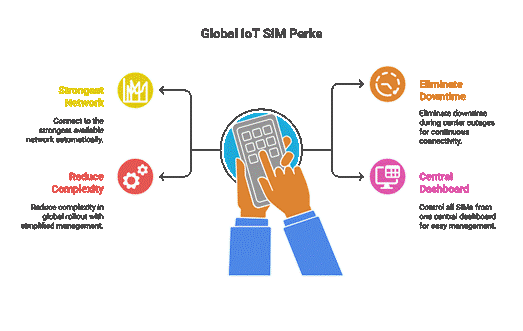
How IoT SIM Data Plans Really Work: Pooled Data, Rate Limits, and Hidden Fees

How do IoT plans work, and what are the associated costs.

Shopping for an IoT data plan looks simple at first. You compare a few per-SIM prices, pick the cheapest one that covers your expected usage, and move on. Then the first invoice arrives—and it doesn’t match the sticker price you signed up for.

The truth is that IoT connectivity pricing has its own logic, one that’s very different from the consumer phone plans most people are used to. Understanding how these plans work—how data gets pooled, where rate limits kick in, and which fees hide below the headline rate—is the difference between a predictable budget and a monthly surprise. Here’s what’s really going on under the hood.

Pay As You Go (PAYG) vs. Pooled Data

The first fork in the road is how your data is allocated.

With a PAYG plan each uses data on a per MB usage model where the account balance is reduced by every bit of data used. There are also either monthly minimum usage requirements or a monthly active SIM card fee. PAYG plans are typically used when there are wide variations in the amount of data a SIM card uses, or every SIM card uses different amounts of data. These plans are also good if there is a wide variation in the countries where services are required, because of differing tariffs across numerous countries.

With Pooled Data, all your SIMs draw from one shared bucket. Buy 100 SIMs with a 500 MB pool each, and you get 50 GB of shared data that any device can pull from. A device that uses 900 MB is perfectly fine as long as another device only used 100 MB. The pool absorbs the variation. For most real-world fleets, pooling can be the smarter choice. Devices in an organization tend to use similar amounts of data and the pool created will offset any minor differences.

Rate Limits and Throttling

Beyond the size of your allowance, pay close attention to how fast you’re allowed to use it. This is where rate limits come in, and they take a few forms.

Speed throttling slows a SIM’s connection once it crosses a threshold—either after hitting a data cap or as a baseline on lower-tier plans. Many IoT plans deliberately cap throughput because most sensors and trackers send tiny bursts of data and never need high speed. That’s fine for a temperature sensor, but a problem for a video camera or a device pushing firmware updates. Match the speed tier for what your device is designed.

Daily or session caps limit how much a single SIM can consume in a defined window. These are often a safeguard: if a device malfunctions and starts looping, the cap stops it from draining your entire pool overnight. Enforced caps that suspend or throttle a runaway SIM automatically are a feature worth having, not a limitation to avoid.

Connection or session limits can restrict how frequently a device establishes new network sessions. Chatty devices that reconnect constantly can bump into these, so it’s worth checking if your hardware behaves that way.

The Fees That Hide Below the Headline Rate

The advertised per-megabyte or per-SIM price is rarely the whole story. Several other charges commonly appear on IoT invoices, and knowing them in advance keeps your total cost of ownership honest.

Activation and provisioning fees.Some providers charge a one-time fee to activate each SIM. At fleet scale, a few dollars per SIM adds up quickly.

Monthly access or platform fees. A recurring per-SIM charge separate from data—often the cost of keeping the SIM connected and manageable, whether or not it transmits anything that month.

Overage rates. The price of data beyond your allowance is frequently far higher than your in-plan rate. Always ask what happens when you exceed the pool, not just what the pool costs.

Inactive or idle SIM fees. Even a SIM sending zero data may incur a small monthly charge to remain active on the network. This surprises teams who assume unused devices are free.

Roaming and cross-border surcharges. A SIM that works globally may be billed differently depending on which country’s network it connects to. Multi-network roaming SIMs are enormously convenient, but confirm whether pricing is flat worldwide or tiered by region.

SMS and command charges. If your devices receive control commands or SMS triggers, those may be billed separately from data.

Reactivation and lifecycle fees. Suspending and later reactivating a SIM can carry its own charge on some plans.

None of these are inherently unfair—they reflect real network costs—but they’re easy to overlook when you’re comparing headline prices. A plan that looks cheaper per megabyte can end up more expensive once access fees and overage rates are factored in.

How to Compare Plans Honestly

To cut through the noise, evaluate plans on total cost of ownership rather than the front-page number. A few questions do most of the work:

1. Is the data per-SIM or pooled, and does unused data roll over?

2. What is the overage rate once I exceed my allowance?

3. Are there activation, monthly (or annual) portal access, or idle-SIM fees?

4. What speed tier do I get, and where does throttling kick in?

5. How is roaming priced across the regions where my devices live?

6. Can I set usage caps and alerts to prevent runaway charges?

Run your realistic usage—not your best-case usage—through those answers, and the genuinely least expensive plan usually looks different from the one with the lowest sticker price.

The Bottom Line

IoT data plans reward buyers who read past the headline rate. Pooled data protects you from uneven device consumption, rate limits keep faulty devices from draining your budget, and understanding the fee structure means no surprises when the invoice lands. The best providers make all of this transparent and pair it with tools—usage caps, alerts, and clear reporting—that let you stay in control.

At OneSimCard IoT, data plans are built around PAYG or pooled flexibility and multi-network capabilites, with the visibility and controls you need to keep spending predictable as your fleet grows. When you understand how the pricing really works, you can size your plan correctly, avoid the hidden costs, and scale with confidence.

IoT SIM Management 101: What a Good Connectivity Platform Should Do

Deploying cellular IoT devices is the easy part. Managing them once they’re in the field—scattered across cities, warehouses, vehicles, or remote sites—is where connectivity projects succeed or quietly fall apart. A single misbehaving SIM can rack up overage charges, a silent device can go undetected for weeks, and a stalled activation can hold up an entire product launch.

That’s why the connectivity platform behind your SIMs matters just as much as the SIMs themselves. A good IoT SIM management platform is the control room for your entire fleet: the place where you provision, monitor, troubleshoot, and control every device from one screen. Here’s what separates a capable platform from a spreadsheet and a support ticket.

Fast, Flexible Activation

Everything starts with activation. A strong platform lets you turn SIMs on and off on your own schedule—individually or in bulk—without waiting on a carrier’s business hours. You should be able to activate a batch of SIMs not just one at a time, block/suspend a device that’s between deployments, and reactivate it later.

Look for lifecycle states that match how hardware actually moves through the world: test, active, blocked/suspended, and retired. The ability to run SIMs through a free or low-cost testing phase during prototype phase—then flip them live only when the device reaches a customer—can save real money at scale.

Real-Time Monitoring and Usage Visibility

Once devices are live, you need to see what they’re doing. Good platforms give you a dashboard that answers the basic questions at a glance: How many SIMs are active? How much data is the fleet consuming? Which devices are online right now, and which have gone quiet?

The best systems go deeper, showing per-SIM data usage, session history, and connection status in near real time. That visibility is what lets you catch a runaway device before it burns through a data pool, or spot a batch of units that never phoned home after installation.

Alerts and Usage Caps

Visibility only helps if you’re actually watching—and nobody watches a dashboard around the clock. That’s why automated alerts and hard usage caps are essential.

A capable platform lets you set thresholds and get notified when a SIM crosses them: approaching its data limit, exceeding a daily ceiling, or connecting from an unexpected location. Even more valuable are enforceable caps that automatically suspend a SIM once it hits a defined limit. For fleets, this is the difference between a predictable monthly bill and a nasty surprise caused by one faulty or compromised device.

Troubleshooting Tools That Actually Diagnose

When a device won’t connect, the platform should help you figure out why—not just tell you something is wrong. Strong troubleshooting tools surface diagnostic information like the SIM’s network registration status, recent connection attempts, last known session, and any errors reported by the network.

The goal is to resolve issues remotely instead of dispatching a technician. Being able to see that a SIM is registered but not passing data—versus not registered at all—points you toward completely different fixes, and saves hours of guesswork.

Location and Reporting

Many IoT deployments benefit from knowing where their devices are, at least approximately. Network-based location—derived from the cell tower a SIM is connected to—gives you a rough position without adding GPS hardware to every unit. It’s useful for asset tracking, theft detection, and verifying that a device landed where it was supposed to.

Reporting rounds this out. A good platform generates the usage, billing, and activity reports you need for internal reviews, customer billing, or forecasting your next order. Exportable data saves you from rebuilding the same summary every month.

APIs for Automation and Scale

Clicking through a dashboard works when you have a handful of SIMs isn’t terribly difficult. It doesn’t scale to thousands. That’s where APIs come in.

A platform with a well-documented API lets you fold SIM management directly into your own systems—activating a SIM automatically when a customer places an order (or registers a shipped device in your portal), pulling usage data into your billing software, or triggering alerts inside your existing monitoring stack. If you’re building a product on top of connectivity, API access isn’t a nice-to-have; it’s the foundation.

Security Controls

IoT security starts at the connectivity layer, and your management platform should give you tools to lock things down. Look for features like:

  • IMEI locking, which binds a SIM to a specific device so a stolen SIM can’t be dropped into other hardware.
  • Private APNs and static IPs, which keep your device traffic off the public internet and give you a predictable, secure network path. (Note that a private APN typically requires a static IP assignment, and most accounts operate a single private APN.)
  • Usage anomaly alerts, which flag the kind of behavior that signals fraud or a compromised device.
  • IP Filtering, create a whitelist of IP addresses a device can send data to and receive data from.

These controls turn your platform from a convenience into a genuine part of your security posture.

Account Administration and Roles

Finally, real deployments involve real teams. A good platform includes account administration features—user roles, permissions, and audit visibility—so the right people can activate SIMs, manage billing, or view reports without everyone having the keys to everything. As your organization grows, this structure keeps your fleet manageable and accountable.

Bringing It Together

The best IoT SIM management platforms combine all of this—activation, monitoring, alerts, troubleshooting, location, reporting, APIs, security, and administration—into a single, coherent interface. That consolidation is the point. When your entire fleet lives in one control room, you spend less time chasing problems and more time building your product.

OneSimCard’s IoT platform, OSCAR, is designed around exactly these capabilities, giving you a single place to manage your SIMs from first activation through full-scale deployment. Whether you’re connecting ten devices or ten thousand, the right platform makes the difference between connectivity you manage and connectivity that manages you.

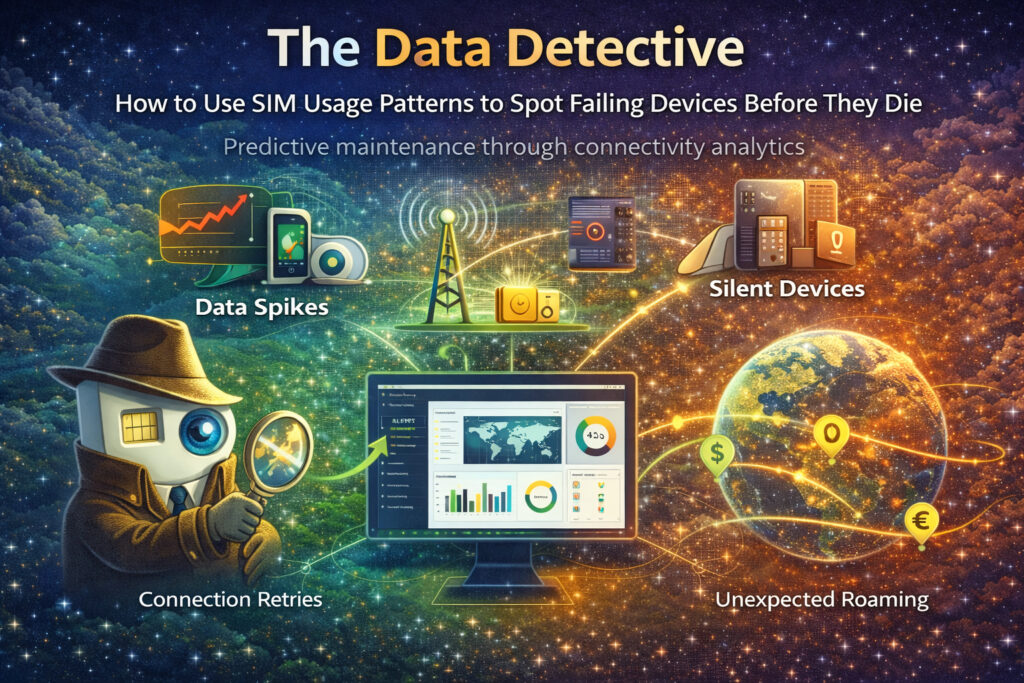
The Data Detective

How to Use SIM Usage Patterns to Spot Failing Devices Before They Die

In large IoT deployments, devices rarely fail without leaving clues. Sensors, trackers, meters, and machines constantly communicate through cellular networks, sending data packets, establishing sessions, and reconnecting when conditions change. Hidden inside those connectivity logs is a quiet story about the health of each device.

Most teams focus on application data when monitoring IoT systems. Temperature readings, machine telemetry, location updates, and sensor outputs receive most of the attention. But another valuable dataset often goes overlooked: SIM connectivity behavior.

SIM usage patterns can reveal early warning signs of device failure long before the device actually stops working. When analyzed properly, connectivity analytics becomes a powerful predictive maintenance tool. Think of it as turning your IoT platform into a digital detective, quietly watching for suspicious patterns before problems escalate.

Every Device Leaves a Connectivity Fingerprint

Every IoT device develops a recognizable network “fingerprint” over time. This fingerprint includes how often it connects, how much data it transmits, which networks it attaches to, and how stable those connections are.

For example, a smart meter might send 500 KB of data every six hours. A vehicle tracker might send 1 MB of data every hour while the vehicle is moving. An industrial sensor might send a few kilobytes every minute.

Once a device has been operating for a few weeks, its connectivity behavior becomes predictable. This baseline becomes the reference point for detecting anomalies.

When that pattern suddenly changes, it often means something is wrong.

Warning Sign #1: Unexpected Data Spikes

One of the most common early indicators of device malfunction is sudden increases in data usage.

A device that normally sends small telemetry packets may suddenly start transmitting large volumes of data. This can happen for several reasons:

  • Firmware loops repeatedly attempting uploads
  • Sensors sending corrupted readings
  • Misconfigured update processes
  • Communication retries caused by poor signal

For example, a device that normally uses 2 MB per day might suddenly jump to 20 MB. That spike may not immediately break the system, but it signals that something abnormal is happening.

If left unchecked, this behavior can drain batteries, overload networks, and dramatically increase operational costs.

Connectivity analytics allows operators to detect these spikes immediately and investigate before the device fails completely.

Warning Sign #2: Connection Retry Storms

Another red flag is a sudden increase in network attachment attempts.

Devices constantly attach and detach from cellular networks as part of normal operation. But excessive connection retries can signal deeper issues.

A retry storm may indicate:

  • Weak or degrading antennas
  • Failing radio modules
  • SIM authentication problems
  • Firmware bugs in the modem stack

When a device repeatedly attempts to reconnect to the network, it consumes significantly more power. Battery-powered devices may drain rapidly as a result.

Monitoring connection frequency allows operators to spot devices that are struggling to stay connected. These devices often fail weeks or months later if the issue goes unresolved.

In predictive maintenance, spotting the struggle early is key.

Warning Sign #3: Silent Devices

Sometimes the biggest warning sign is silence.

If a device normally transmits data every hour but suddenly stops communicating for several hours or days, something may have changed.

Possible causes include:

  • Power supply failures
  • Battery depletion
  • Firmware crashes
  • Physical damage
  • Environmental interference

A single missed transmission might not matter. But repeated gaps in connectivity often indicate a device approaching failure.

Connectivity monitoring platforms can trigger alerts when a device has not connected within an expected time window.

Instead of discovering a dead device during the next maintenance visit, teams can respond immediately.

Warning Sign #4: Geographic Anomalies

Location-aware deployments can also reveal device health through unexpected roaming behavior.

If a device that normally connects through one regional network suddenly attaches to different operators or different countries, it may indicate:

  • Weakening signal conditions
  • Antenna damage
  • Physical relocation of the device
  • Configuration errors

Multi-network IoT SIMs allow devices to choose the strongest available signal, but unusual roaming patterns often signal environmental or hardware issues.

Tracking these shifts helps engineers identify network coverage problems and failing device components.

Turning Raw Data Into Predictive Signals

The key to predictive maintenance through connectivity analytics is turning raw usage data into meaningful signals.

Most IoT SIM management platforms already collect valuable metrics such as:

  • Data usage per device
  • Session counts and durations
  • Network attachment history
  • Signal registration status
  • Geographic connection patterns

By analyzing these metrics over time, operators can establish normal behavior ranges for each device type.

Once these baselines are defined, automated monitoring rules can detect deviations.

For example:

  • Data usage increases by 300 percent
  • Connection retries exceed normal thresholds
  • Device offline longer than expected interval
  • Network operator changes unexpectedly

These deviations become alerts that trigger investigation.

Machine Learning and Pattern Recognition

As deployments scale into thousands or millions of devices, manual analysis becomes impractical.

Machine learning tools are increasingly used to analyze connectivity patterns automatically.

Algorithms can detect subtle changes in behavior that humans might overlook. For example:

  • Gradual increases in retry attempts over several weeks
  • Slow battery drain reflected in reduced connection intervals
  • Minor shifts in signal strength patterns

These early signals often appear long before catastrophic failure occurs.

Predictive models trained on historical data can estimate the probability of device failure and recommend preventive maintenance.

This turns connectivity monitoring into a proactive strategy rather than a reactive response.

Reducing Field Maintenance Costs

One of the biggest benefits of predictive connectivity analytics is reducing unnecessary service visits.

Traditional maintenance models rely on fixed schedules. Technicians inspect devices periodically regardless of whether they actually need attention.

Predictive monitoring allows maintenance to happen only when necessary.

For example:

  • A device showing stable connectivity may not require inspection for years
  • A device showing abnormal connection behavior can be prioritized for immediate service

This targeted approach reduces truck rolls, labor costs, and downtime.

It also improves reliability because failing devices are repaired before they disrupt operations.

Connectivity as a Health Monitor

The idea behind the “data detective” approach is simple: connectivity data reflects the physical and operational state of devices.

A healthy device communicates consistently. It sends predictable volumes of data, connects reliably to networks, and maintains stable session behavior.

When those patterns change, something in the system has changed.

Connectivity analytics therefore becomes a kind of digital stethoscope for IoT infrastructure.

It listens quietly to every device and flags the subtle signals that indicate trouble.

The Future of Predictive IoT Operations

As IoT deployments continue to scale globally, predictive maintenance will become increasingly important.

Connectivity analytics will play a central role in this evolution. Instead of merely enabling communication, SIM platforms will act as intelligence layers that monitor device health in real time.

Future systems may combine connectivity data with:

  • Device telemetry
  • Environmental data
  • Network performance analytics
  • AI-driven anomaly detection

Together, these signals will create a comprehensive view of device behavior.

Failures will no longer be surprises. They will be predicted events.

The Detective Never Sleeps

Every IoT device leaves behind a trail of connectivity clues. When those clues are carefully analyzed, they reveal the early stages of failure long before systems break down.

By turning SIM usage patterns into predictive insights, organizations gain the ability to intervene earlier, reduce downtime, and extend device lifecycles.

The best IoT deployments are not just connected. They are observant.

And in a world of millions of devices, the data detective is always watching.

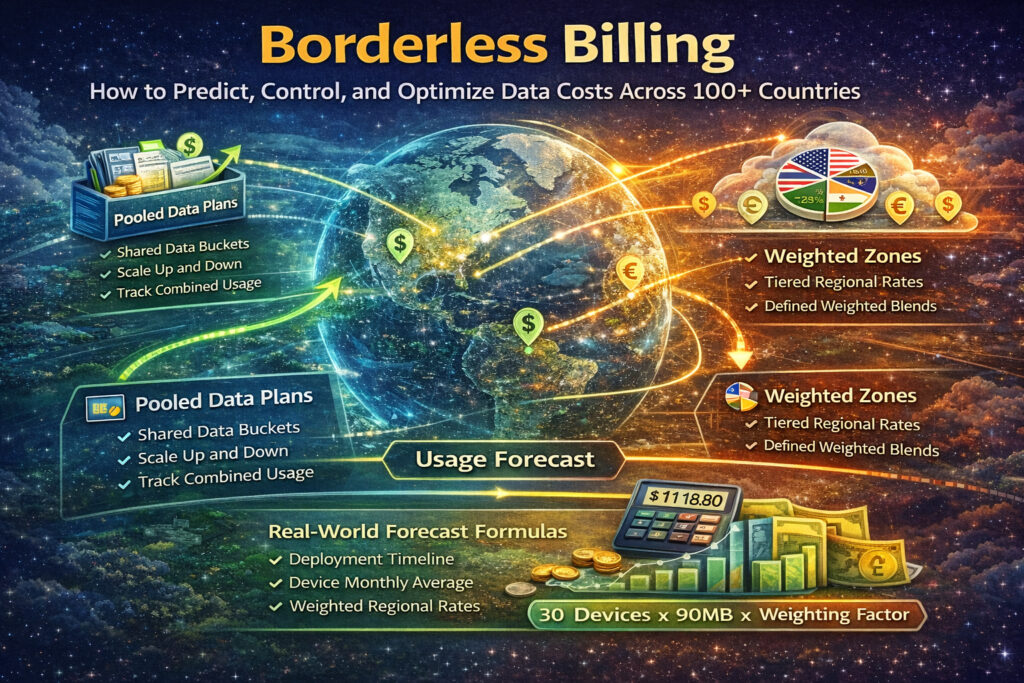
Borderless Billing: How to Predict, Control, and Optimize Data Costs Across 100+ Countries

Global IoT deployments are built to move. Devices cross borders inside shipping containers, fleets travel across continents, and infrastructure expands into new markets every quarter. Connectivity makes this possible. Billing complexity threatens to slow it down.

When your SIM footprint stretches across 50, 80, or 100+ countries, data pricing stops being a simple line item. It becomes a variable landscape shaped by roaming agreements, local carrier rates, currency differences, taxation rules, and usage behavior. Without a strategy, invoices turn into surprises. With the right structure, billing becomes predictable, measurable, and optimized.

Borderless billing is not about eliminating cost. It is about designing a system where cost behaves logically, even when your devices do not stay in one place.

The Three Forces Behind Global IoT Costs

Before you can control billing, you must understand what drives it. Across international IoT deployments, three primary forces determine your data spend.

1. Geography

Data costs vary dramatically by country. Mature telecom markets with competitive carriers may offer lower rates. Remote or smaller markets may carry higher roaming costs. Regulatory frameworks and wholesale agreements influence pricing behind the scenes.

2. Usage Behavior

Not all devices behave the same way. Some transmit kilobytes per day. Others push megabytes per hour. Firmware updates, retries due to weak signal, and unexpected application changes can dramatically increase consumption.

3. Network Routing

In some cases, data travels further than expected. Roaming configurations may route traffic through a home network in another country before reaching the cloud. This can increase latency and cost simultaneously.

Understanding these variables is the first step toward building a predictive billing model.

Building a Predictable Cost Formula

At scale, billing should never rely on guesswork. A simple forecasting framework helps organizations estimate and monitor global data spend.

A practical forecasting formula looks like this:

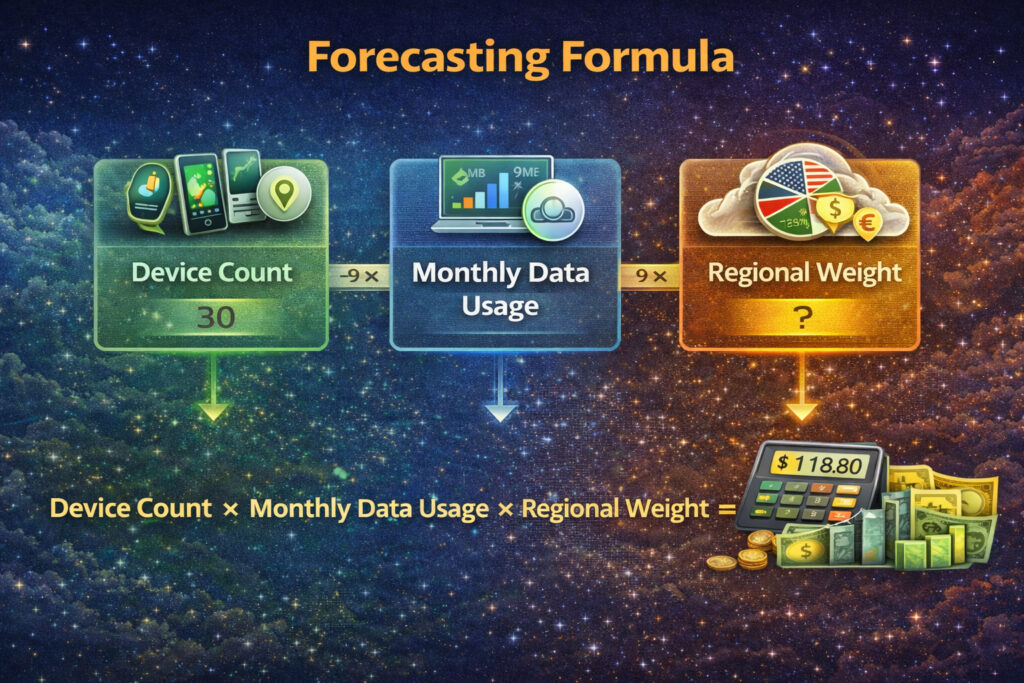
Total Monthly Data Cost = (Average Data per Device × Number of Active Devices × Regional Rate) + Platform Fees

Breaking it down:

  • Average Data per Device (MB): Calculated using historical usage data
  • Number of Active Devices: Adjusted for activation trends and seasonal fluctuations
  • Regional Rate ($/MB): Weighted average across the countries in which devices operate
  • Platform Fees: SIM management, support, and service charges (NOTE: OneSimCard IoT has NONE of these fees. You only pay for usage!)

To refine accuracy, organizations often segment devices into usage tiers:

  • Low usage: <5 MB per month
  • Medium usage: 5–50 MB per month
  • High usage: 50+ MB per month

Forecasting becomes more precise when each segment is modeled separately.

The Power of Pooled Data Plans

One of the most effective tools in borderless billing is pooled data.

Instead of assigning strict data limits to each SIM, pooled plans allow a group of devices to share a collective data allowance. High-usage devices draw more from the pool. Low-usage devices draw less. The overall balance smooths unpredictability.

For example:

If 1,000 devices each have a 10 MB limit, the total theoretical usage is 10,000 MB. In reality, only a portion may reach that limit. With pooling, unused capacity from low-consumption devices offsets heavier users.

The benefits include:

  • Reduced overage charges
  • Improved budget predictability
  • Simplified plan management

Pooling is particularly effective for fleets and geographically diverse deployments where usage varies by environment.

Usage Forecasting: Turning History into Strategy

Historical usage data is one of the most valuable assets in cost optimization.

Effective forecasting requires analyzing:

  • Monthly data growth trends
  • Seasonal spikes
  • Firmware update cycles
  • Geographic expansion patterns

A common forecasting method involves calculating rolling averages over three- or six-month periods to smooth anomalies. Growth multipliers can then be applied based on business expansion plans.

For example:

If usage has grown 8 percent quarter over quarter and 5,000 new devices are scheduled for activation, projected data consumption should account for both organic growth and new deployments.

Forecasting is not about perfect prediction. It is about narrowing uncertainty.

Real-Time Monitoring Prevents Billing Shock

Even the best forecasts can fail if monitoring is absent.

Modern IoT SIM management platforms provide real-time visibility into data consumption. Instead of discovering overages at the end of the billing cycle, operators can set thresholds that trigger alerts when devices approach expected limits.

Alert examples include:

  • Device exceeds projected usage by 25 percent
  • Unusual spike in a specific country
  • SIM attaching outside approved geographic regions

Early detection allows teams to investigate root causes before costs escalate.

FeaturePer-SIM PlansPooled Global Plans
Billing StructureEach SIM has its own fixed data allowance or just pay per MB used at agreed upon rateMultiple SIMs share a collective data bucket
Cost PredictabilityPredictable per device, but vulnerable to overages and per country tariff ratesPredictable at fleet level, smoother usage distribution
Overage RiskHigh if individual devices exceed limitsLower, excess usage balanced across pool
ScalabilityRequires plan adjustments per SIMEasily scales by expanding pool size
Administrative OverheadHigher — manage limits individuallyLower — manage usage at group level
Best ForSmall, static deploymentsLarge, dynamic, multi-country deployments
Cost Efficiency at ScaleCan become expensive with uneven usageMore efficient when device usage varies
Global ExpansionRequires region-by-region plan mappingCentralized cost structure across countries
Usage VisibilityPer-device monitoring requiredFleet-level analytics with device drill-down
Budget ForecastingSimple at small scaleMore accurate at enterprise scale

Geographic Cost Weighting

When devices operate across many countries, weighted averages help simplify modeling.

Example:

If 40 percent of devices operate in Region A at $0.01/MB and 60 percent operate in Region B at $0.015/MB, the weighted average rate becomes:

(0.4 × 0.01) + (0.6 × 0.015) = $0.013/MB

This blended rate provides a more realistic basis for forecasting than assuming a single uniform cost.

As deployments shift geographically, the weighted rate should be recalculated quarterly.

Controlling Costs Through Policy Automation

Predictability increases when billing controls are automated.

Examples of cost-control policies include:

  • Automatic throttling after defined thresholds
  • Temporary suspension after extended inactivity
  • Country-based activation restrictions

Automation reduces manual oversight and ensures cost discipline remains consistent across thousands of SIMs.

The Role of Multi-Network SIM Strategies

Multi-network IoT SIMs can also influence billing efficiency.

By connecting devices to stronger local networks, they reduce retransmissions caused by weak signal strength. Fewer retries mean lower data consumption.

Local breakout routing can also shorten data paths, potentially reducing roaming inefficiencies.

Connectivity design directly affects cost behavior.

Negotiation and Scale Leverage

As deployments grow, organizations gain negotiating leverage.

Volume-based pricing, committed data agreements, and regional bundles can significantly reduce per-megabyte costs. Understanding your usage distribution strengthens your position during pricing discussions.

Transparency in usage analytics transforms negotiation from speculation into data-backed strategy.

Managing Currency and Tax Complexity

Operating across 100+ countries introduces currency fluctuations and varying tax structures.

Centralized billing in a single currency simplifies accounting. Some organizations also model costs using conservative exchange rate buffers to protect against volatility.

Consistency in billing structure is as important as rate optimization.

From Cost Center to Strategic Asset

Borderless billing should not be reactive. It should be engineered.

When forecasting models, pooled plans, automation policies, and real-time monitoring work together, billing becomes predictable and controllable. Instead of reacting to invoices, teams can make informed decisions about expansion, product pricing, and operational efficiency.

Connectivity cost is no longer a mysterious variable. It becomes a managed metric aligned with business growth.

The Final Equation

Operating across 100+ countries introduces complexity, but complexity does not have to mean chaos.

With the right formulas, pooled structures, and visibility tools, global IoT billing can be forecasted, optimized, and scaled confidently.

Borderless billing is ultimately about turning geography into math and unpredictability into strategy. When your data costs behave as logically as your devices do, global expansion becomes not just possible, but sustainable.

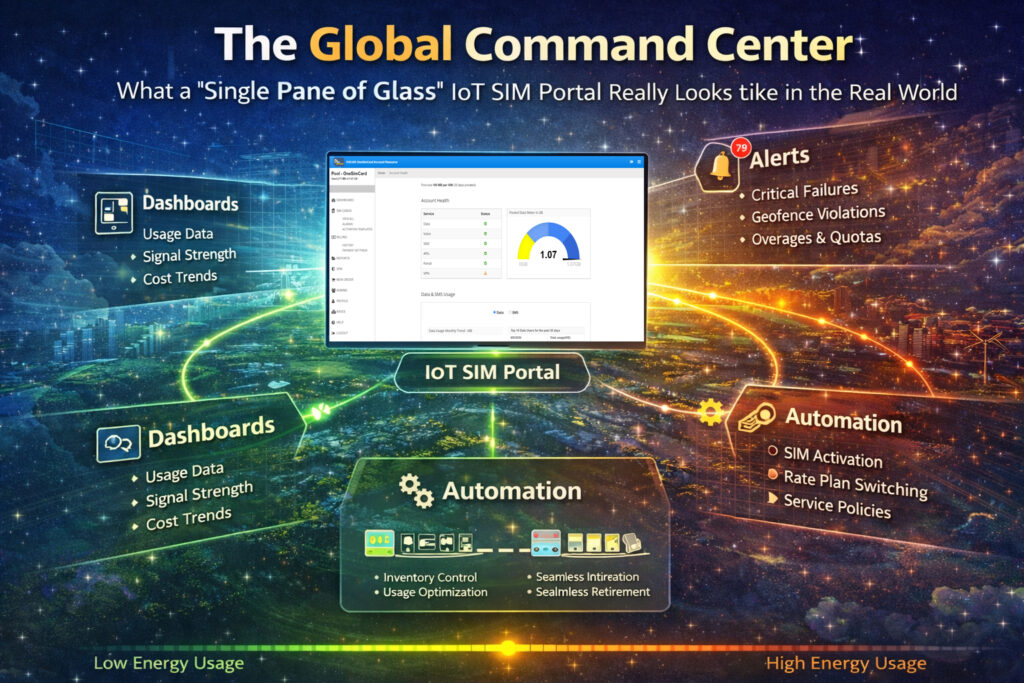
The Global Command Center: What a “Single Pane of Glass” IoT SIM Portal Really Looks Like in the Real World

IoT SIM Card Command center/Portal

As IoT deployments expand from pilot projects to global ecosystems, connectivity management quickly becomes one of the biggest operational challenges organizations face. Hundreds, thousands, or even millions of devices begin transmitting data across countries, networks, and time zones. Each device has an IoT SIM, each IoT SIM has usage patterns, and each connection represents both opportunity and risk.

Without centralized visibility, managing this complexity can feel like trying to control air traffic using sticky notes.

This is where the concept of a “single pane of glass” IoT SIM portal emerges. More than just a dashboard, it acts as a global command center, giving operators, engineers, and business teams a unified view of connectivity across the entire deployment. But what does this actually look like in the real world? Let’s walk through how modern IoT SIM management platforms function day to day.

The Dashboard: Your Network at a Glance

The first experience inside a true IoT command center is clarity.

A well-designed dashboard does not overwhelm users with raw data. Instead, it presents the health of the entire deployment in a visual snapshot. Operators can immediately see how many SIMs are active, suspended, or inactive. Maps display geographic distribution, highlighting where devices are currently connected and which networks they are using.

Key performance indicators typically include:

  • Active SIM count and growth trends
  • Data consumption by region or device group
  • Network attachment status
  • Session activity and connection success rates
  • Alerts requiring attention

This overview transforms connectivity from a technical detail into an operational metric. Executives can track expansion, operations teams can monitor performance, and engineers can spot anomalies instantly.

Real-Time Visibility: Knowing What’s Happening Now

In IoT environments, problems rarely announce themselves politely. A device may suddenly consume excessive data, lose connectivity, or attach to an unexpected network.

Real-time monitoring tools allow teams to detect these changes immediately. Instead of waiting for billing surprises or customer complaints, operators can watch usage patterns as they happen.

Live session views often provide details such as:

  • Current network operator
  • Signal and registration status
  • Active data sessions
  • IP assignment and routing information
  • Recent connection history

This level of visibility turns troubleshooting into investigation rather than guesswork.

Alerts: The Early Warning System

A global deployment cannot rely on humans constantly watching dashboards. Automation begins with intelligent alerts.

Modern IoT portals allow administrators to define thresholds and behaviors that trigger notifications. For example:

  • Data usage exceeds expected limits
  • A SIM connects outside an approved country
  • A device goes offline for a defined period
  • Rapid session retries indicate connectivity issues

Alerts can be routed via email, SMS, webhook, or integrated into monitoring platforms like Slack or enterprise incident systems. The goal is simple: surface issues before they become outages.

In practice, alerts become the nervous system of the command center, signaling when attention is required.

Automation: Scaling Without Adding Complexity

Manual management works for dozens of SIMs. It fails completely at scale.

Automation is what allows a single platform to manage massive deployments efficiently. Through rules and templates, organizations can define how SIMs behave throughout their lifecycle.

Examples include:

  • Assigning devices to usage pools or billing groups
  • Applying data limits or SMS limits policies
  • Suspending SIMs after inactivity thresholds
  • Locking SIMs to devices by tying it to a particular IMEI

Automation reduces human error and ensures consistent policies across regions and teams. It also enables lean operations, where small teams manage vast fleets of connected devices.

SIM Lifecycle Management: From Warehouse to Retirement

Every IoT SIM follows a lifecycle. A command center portal tracks this journey from beginning to end.

1. Inventory and Provisioning

SIMs begin as inventory assets. Teams can assign identifiers, nicknames, or device associations before deployment. Bulk provisioning tools prepare many SIMs simultaneously.

2. Activation

Activation may occur manually or automatically through API’s when a device is registered by your customer. Policies ensure correct configuration from the start.

3. Operational Monitoring

During active service, the portal monitors usage, connectivity health, and compliance with policies.

4. Optimization

Usage analytics help operators adjust plans, pools, or network preferences to improve efficiency and cost control.

5. Suspension or Decommissioning

When devices retire or projects end, SIMs can be suspended or permanently deactivated, preventing unauthorized usage.

Managing this lifecycle centrally eliminates fragmented workflows across spreadsheets and carrier portals.

Analytics: Turning Data into Insight

Beyond monitoring, command centers provide analytics that reveal patterns across deployments.

Operators can analyze trends such as:

  • Seasonal usage changes
  • Regional network performance differences
  • Device firmware impact on connectivity
  • Data consumption by application type

These insights help organizations move from reactive management to proactive optimization.

For example, identifying consistent signal issues in a region might lead to antenna redesigns or network preference adjustments.

API Integration: The Portal That Extends Everywhere

A true single pane of glass does not live in isolation. APIs allow the portal to integrate with enterprise systems, enabling automation beyond the interface itself.

Organizations often connect IoT platforms to:

  • Device management systems
  • Billing platforms
  • CRM tools
  • Logistics tracking software
  • Security monitoring environments

Through APIs, SIM actions like activation, suspension, or usage queries can happen automatically as part of business workflows.

The portal becomes not just a dashboard, but an operational engine.

Security and Access Control

Large organizations require controlled access to sensitive systems. Modern IoT portals provide role-based permissions so different teams see only what they need.

Examples include:

  • Finance teams viewing billing analytics
  • Operations teams managing SIM status
  • Developers accessing API credentials
  • Regional managers monitoring local deployments

Audit logs record every action, creating accountability and simplifying compliance reporting.

The Human Experience Behind the Technology

Despite all the technology, the real success of a command center lies in usability.

Operators should be able to diagnose issues quickly, onboard new devices easily, and understand system behavior without deep telecom expertise. Clear design, intuitive navigation, and meaningful visualization turn complex infrastructure into manageable workflows.

In real deployments, the difference between a usable portal and a confusing one often determines operational efficiency.

From Visibility to Control

The phrase “single pane of glass” is sometimes misunderstood as simply viewing data in one place. In reality, the goal is unified control.

A true global command center allows organizations not only to observe connectivity but to shape it. Policies, automation, analytics, and lifecycle management work together to create a responsive system that adapts as deployments grow.

The Future Command Center

As IoT continues to evolve, command centers will incorporate AI-driven insights, predictive alerts, and automated optimization. Platforms will anticipate connectivity issues before they occur and recommend adjustments based on historical performance.

Connectivity management will shift from monitoring to orchestration.

The Final View

Behind every successful global IoT deployment is an invisible operations hub coordinating millions of connections. The single pane of glass is not just a convenience. It is the foundation that allows organizations to scale confidently.

When dashboards provide clarity, alerts provide awareness, and automation provides control, connectivity stops being a challenge and becomes a strategic advantage.

The global command center is where complexity becomes visibility and visibility becomes power.

OneSimCard IoT’s cloud based, proprietary OSCAR SIM Management Portal was designed internally to be powerful but simple to use. We give you all the functionality you need, but nothing you don’t to make it a clean and easy user experience. Our Pooled and Pay-As-You-Go (PAYG) portals include all the security, automation, and integration to make IoT SIM card deployments a breeze.

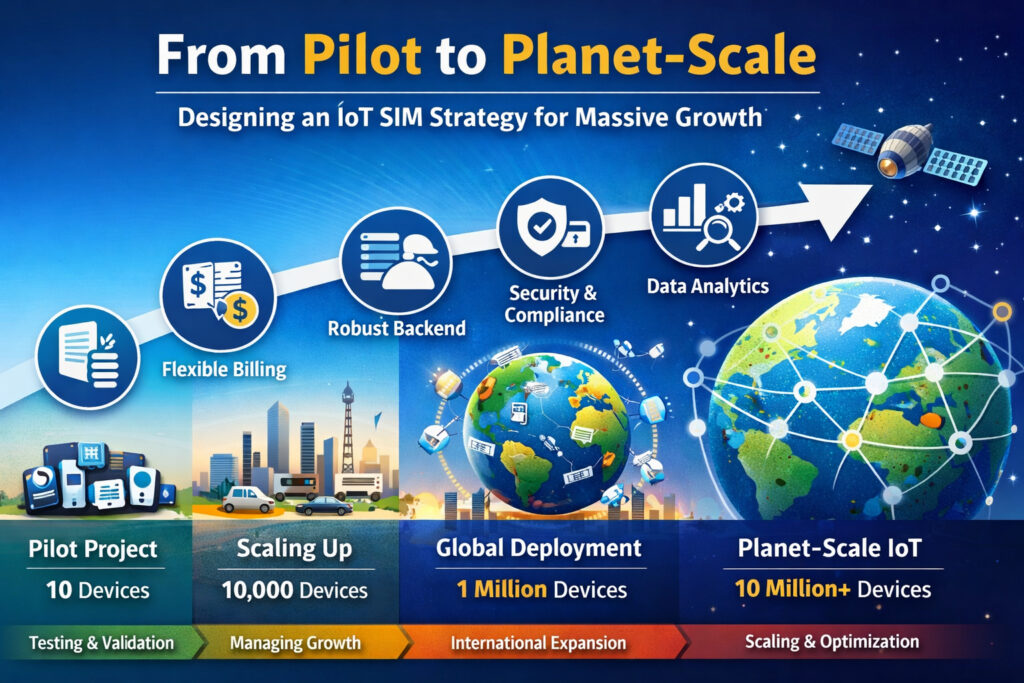
From Pilot to Planet-Scale: How to Design an IoT SIM Strategy That Scales from 10 Devices to 10 Million

Launching an IoT project often begins with a spark: a handful of sensors in a warehouse, a few smart meters in a neighborhood, or a prototype tracker riding along in the back of a delivery van. The pilot phase feels intimate and manageable. Data flows, dashboards glow, and success seems just a firmware update away. But when that spark catches and the project grows from dozens of devices to thousands, then millions, connectivity stops being a background detail and becomes the nervous system of your entire operation.

This is where many promising IoT deployments stumble. The same SIM strategy that worked beautifully for ten devices can collapse under the weight of global scale. Networks behave differently across borders, billing becomes a maze of currencies and contracts, and managing millions of active endpoints can feel like herding digital constellations across the sky.

Designing an IoT SIM strategy with planet-scale ambition from day one is not about overengineering. It is about building a flexible foundation that grows as your deployment grows, without forcing painful migrations or costly rewrites along the way.

The Pilot Phase: Where Assumptions Are Born

In the early days, speed usually wins. Teams grab a handful of SIM cards, plug them into devices, and get the proof of concept running. Coverage looks fine, data costs seem reasonable, and the portal dashboard feels like a cockpit for the future. But pilots often create hidden assumptions that do not survive scale.

At ten devices, it does not matter if a SIM only works well in one country. At ten million, regional coverage gaps can turn into entire dark continents on your network map. At pilot scale, a simple spreadsheet can track usage. At global scale, billing and analytics require automation, APIs, and real-time alerts.

The key question to ask during the pilot is not “Does this work?” but “Will this still work when everything changes?”

Coverage Without Borders

One of the first scaling challenges is geography. Many IoT projects begin in a single region, often near headquarters or a primary market. When expansion starts, devices suddenly appear in new regulatory environments, new radio landscapes, and new carrier ecosystems.

A planet-scale SIM strategy relies on multi-network access rather than a single carrier relationship. This means your devices can connect to the strongest available network in each country, rather than being locked into a roaming agreement that may not perform well everywhere. Multi-IMSI or profile-based SIMs allow devices to adapt as they move or as local networks change over time.

Think of your connectivity like a passport instead of a visa. A visa lets you enter one country. A passport lets you keep traveling when the journey evolves.

Building for Network Intelligence

At small scale, a dropped connection is an inconvenience. At global scale, it can become a systemic failure. Network intelligence is what separates resilient IoT deployments from fragile ones.

Modern IoT SIM platforms provide features like automatic failover, signal quality monitoring, and network performance analytics. These tools allow you to see not just where your devices are, but how well they are communicating. Over time, this data becomes a strategic asset. You can identify underperforming regions, predict outages, and even optimize antenna design based on real-world signal behavior.

Scaling is not just about adding more devices. It is about teaching your network to learn from itself.

Security as a Growth Enabler

Security is often treated as a gate at the end of the road, something to pass before going live. At planet scale, security becomes the road itself.

As your deployment grows, your attack surface grows with it. Public internet access for millions of devices can expose sensitive data and critical infrastructure to unnecessary risk. This is where private APNs, VPN tunnels, and network-level firewalls built into your SIM strategy become essential.

By routing device traffic through a controlled, private network path, you reduce exposure and simplify compliance with regulations like GDPR, HIPAA, or industry-specific standards. Instead of bolting security onto each device individually, you bake it into the connectivity layer itself.

In a global deployment, the SIM is not just a key. It is the lock, the door, and the hallway behind it.

Data Economics at Scale

The difference between a good and a great IoT SIM strategy often shows up on the invoice. At small scale, data costs feel predictable. At large scale, even small inefficiencies can multiply into major budget line items.

Pooled data plans are one way to smooth out usage variability across thousands of devices. Instead of each SIM having its own strict limit, the entire deployment shares a common pool of data. High-usage devices balance out low-usage ones, creating a more efficient and predictable cost structure.

Real-time usage monitoring and automated alerts also become critical. When a device suddenly spikes in data consumption, it can indicate a malfunction, a security issue, or a firmware loop. Catching that early saves both money and operational headaches.

At planet scale, every megabyte tells a story. The trick is learning how to read it.

The Single Pane of Glass

Managing ten devices can be done with a list. Managing ten million requires a command center.

A centralized SIM management portal becomes the heart of a global IoT operation. From one interface, teams should be able to activate, suspend, or reassign SIMs, monitor connectivity status, view usage trends, and integrate data into their own systems through APIs.

This “single pane of glass” approach reduces complexity across departments. Operations teams see device health. Finance teams see cost trends. Developers see integration points. Executives see growth in motion.

The portal is not just a tool. It is the shared language of your entire IoT organization.

Designing for Motion and Change

Many IoT deployments do not stay in one place. Fleets cross borders, containers move across oceans, and devices are redeployed from one market to another as business priorities shift.

A scalable SIM strategy treats movement as a feature, not a problem. This means supporting seamless roaming, fast network handovers, and compliance with local regulations around permanent roaming or data residency.

It also means planning for technology shifts. The networks of today will not be the networks of tomorrow. LTE-M, NB-IoT, and 5G are all evolving, and future standards will follow. eSIM and iSIM technologies allow connectivity profiles to be updated over the air, extending the life of hardware and protecting your investment as the connectivity landscape changes.

Choosing a Partner, Not Just a Provider

At pilot scale, any SIM that works can feel like the right choice. At planet scale, the relationship matters as much as the technology.

A true IoT connectivity partner offers more than coverage maps and price sheets. They provide onboarding support, API documentation, integration guidance, and a roadmap that aligns with your own growth plans. They understand the regulatory, technical, and operational challenges of scaling across continents and industries.

The difference shows up when something goes wrong, or when something goes bigger than expected.

From Experiment to Ecosystem

The journey from ten devices to ten million is not just a technical transformation. It is an organizational one. Connectivity touches product design, customer experience, finance, compliance, and strategy.

By treating your IoT SIM strategy as a core part of your architecture, rather than an afterthought, you create a platform that can support innovation instead of slowing it down. New markets become opportunities instead of obstacles. New use cases become extensions instead of exceptions.

Planet-scale IoT is not about building the biggest network. It is about building the most adaptable one.

The Final Signal

Every global IoT success story begins the same way: with a small pilot and a bold idea. What separates the stories that fade from the ones that reshape industries is the foundation beneath them.

Design your SIM strategy like you expect to succeed. Build for borders you have not crossed yet, regulations you have not met yet, and networks that have not been turned on yet.

When your connectivity is ready for the whole planet, your ideas can be too.

How to Monitor and Manage Global IoT Deployments from One Portal

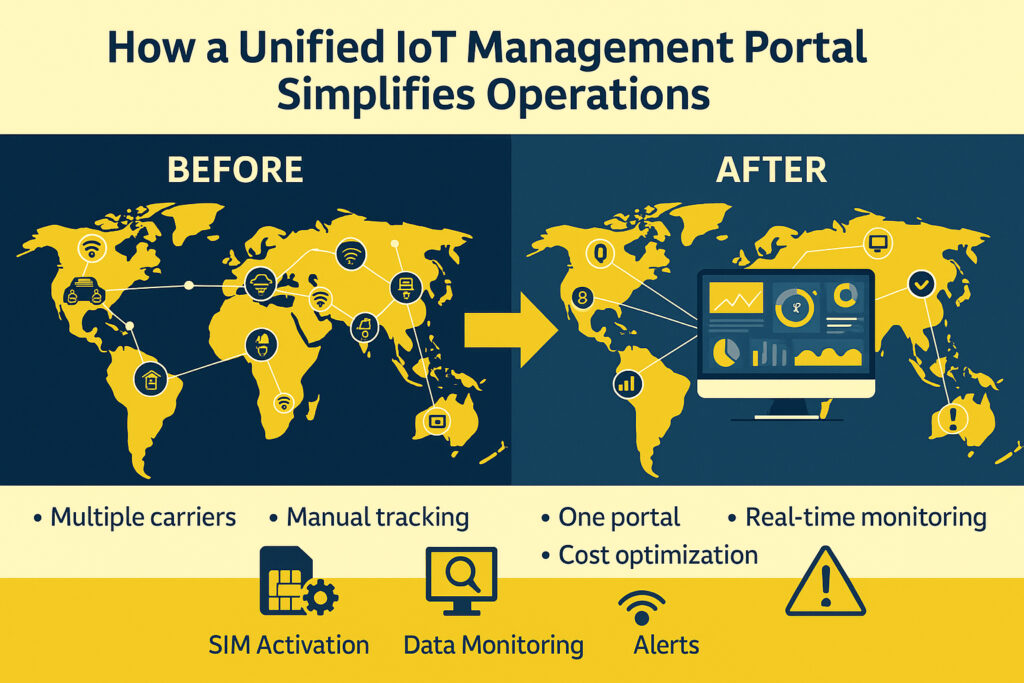
Image showing the improvement that a single IoT SIM card Management platform can make

Streamlining Global IoT Device Management for Scalability, Security, and Control

In today’s connected world, enterprises are deploying IoT devices across continents—tracking vehicles, monitoring industrial equipment, managing smart city infrastructure, and enabling connected healthcare. Each device generates data and depends on reliable network connectivity to function effectively. But managing thousands—or even millions—of connected devices globally can quickly become overwhelming.

That’s where IoT management portals come in. A centralized management platform allows organizations to monitor, configure, and optimize IoT SIM cards and devices from one dashboard, providing complete visibility and control over their global connectivity footprint.


🌐 The Challenge: Managing IoT at Scale

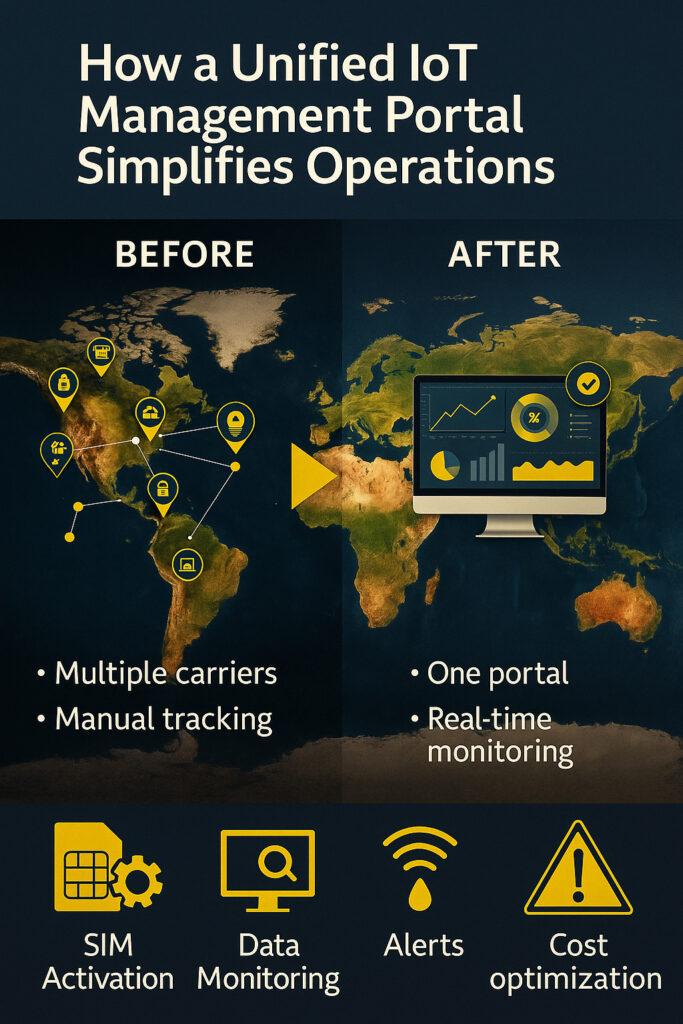
Global IoT deployments often span multiple regions, carriers, and technologies. Without centralized oversight, teams face fragmented visibility, inconsistent network behavior, and mounting operational costs.

Key challenges include:

  • Fragmented carrier relationships – Each carrier has its own SIM management platform, pricing model, and reporting standards.
  • Limited visibility – Tracking device status, signal strength, and data consumption across networks is difficult.
  • Manual configuration – Activating, suspending, or adjusting SIM settings often requires multiple logins or manual API calls.
  • Data security risks – Without secure provisioning and access control, devices become vulnerable to misuse or data breaches.

As IoT scales, these inefficiencies can translate into higher costs, slower response times, and reduced reliability. The solution? A unified IoT management portal that integrates all your global SIMs—no matter the network.


🧭 The Solution: A Unified IoT SIM Management Portal

A modern IoT SIM management portal acts as the command center for your connected devices. Instead of juggling multiple carrier tools, you gain a single pane of glass view into your entire IoT ecosystem—from SIM activation to real-time analytics.

Core Capabilities of a Global IoT Portal:

  1. Centralized SIM Lifecycle Management
    • Activate, deactivate, suspend, or reassign SIMs instantly.
    • Provision new devices remotely
    • Manage device groups by region, use case, or project.
  2. Real-Time Data Monitoring
    • Track data usage per SIM or group in real time.
    • Set usage thresholds and alerts to prevent overages.
    • Identify inactive or malfunctioning devices at a glance.
  3. Multi-Network Connectivity
    • Access hundreds of partner networks in 200+ countries.
    • Eliminate connectivity gaps with multi-IMSI SIMs that switch automatically to the best available network.
    • Maintain uptime with non-steered connectivity—ensuring your devices always choose the strongest signal.
  4. Security and Access Control
    • Assign role-based permissions for administrators, engineers, and partners.
    • Secure connections through private static IPs, VPNs, or APNs.
    • Monitor SIM authentication and network traffic to detect anomalies.
  5. Automation and APIs
    • Integrate the portal with your internal systems or CRM.
    • Automate workflows for activation, billing, and reporting.
    • Use APIs for seamless data synchronization across platforms.

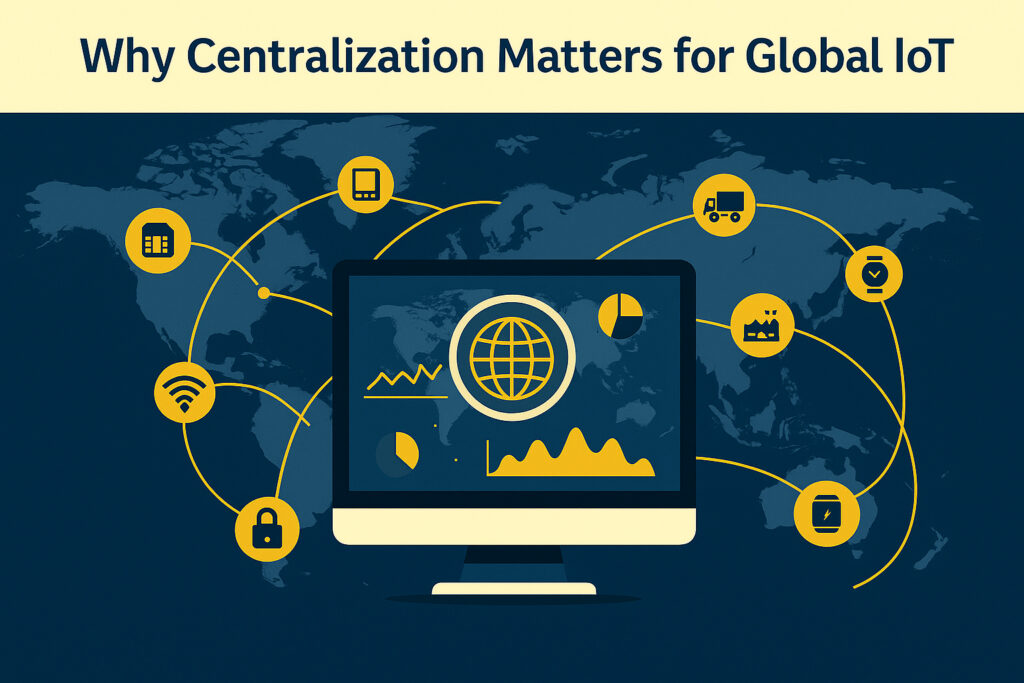
🔍 Why Centralization Matters for Global IoT

1. Simplified Operations

A unified portal means fewer manual processes. Instead of managing separate systems per country or carrier, everything is consolidated. This reduces errors, improves deployment speed, and simplifies scaling to new markets.

2. Cost Control and Predictability

By aggregating data usage across all devices, you can identify high-usage outliers and adjust plans dynamically. Automated alerts help prevent bill shock, while detailed analytics enable smarter purchasing decisions.

3. Proactive Troubleshooting

With real-time device diagnostics, engineers can detect and resolve connectivity issues instantly—often before the end user even notices. The portal’s visibility across carriers means troubleshooting happens in one place.

4. Enhanced Security

Centralized control helps maintain consistent security policies globally. You can enforce encryption, manage SIM authentication, and disable compromised devices remotely—protecting sensitive IoT data.

5. Scalability and Flexibility

As your deployment grows, so does your control. A global IoT management portal is built to handle millions of devices without sacrificing speed or visibility. With API integration, it fits into existing enterprise infrastructure effortlessly.


🚀 OneSimCard IoT: Managing Global Connectivity with Ease

The OneSimCard IoT OSCAR Management Portal was built specifically for enterprises managing large-scale IoT and M2M deployments. Designed around flexibility and transparency, it delivers everything you need to oversee your connected ecosystem from one secure interface.

Key Features:

  • Global Coverage: Access hundreds of networks in 200+ countries.
  • Multi-IMSI SIM Technology: Seamless network switching for continuous uptime.
  • Real-Time Usage Dashboard: Monitor data, SMS, and session logs per SIM or group.
  • Remote Provisioning: Activate SIMs over the air without physical swaps.
  • Private IP and VPN Options: Build secure tunnels for device communication.
  • API Integration: Automate workflows and integrate with enterprise systems.

Whether you’re managing smart energy grids, fleet tracking, or industrial IoT, the OneSimCard portal gives you global visibility, control, and scalability—without the complexity.


🧩 Future Outlook: The Next Phase of IoT Management

As IoT continues to evolve, so will the management tools that support it. Expect to see portals powered by AI-driven analytics, predictive maintenance alerts, and zero-touch provisioning. These innovations will turn management platforms from reactive tools into proactive engines for business intelligence.

Companies that adopt centralized IoT management early gain a critical advantage: scalability without chaos. Instead of drowning in data silos and support tickets, they stay agile, secure, and connected—ready to harness the full potential of IoT.


⚡ Final Thoughts

Managing global IoT deployments doesn’t have to be complicated. With the right management portal, organizations can transform network chaos into clarity—seeing every SIM, every byte, and every connection in real time.

The OneSimCard IoT OSCAR Management Portal empowers you to monitor, control, and optimize your entire global connectivity infrastructure from one secure, intuitive platform.

Because in IoT, control isn’t a luxury—it’s the key to reliability, security, and long-term success.

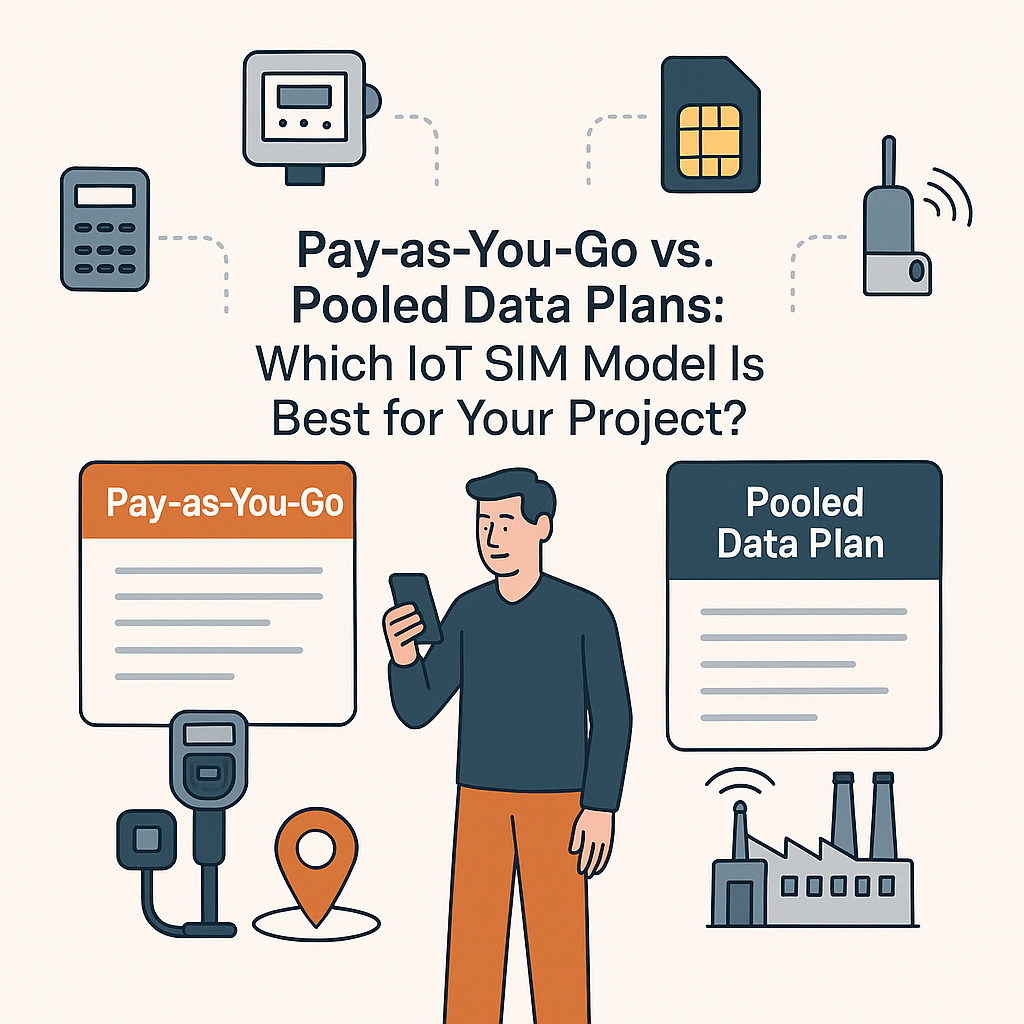
Pay-as-You-Go vs. Pooled Data Plans: Which IoT SIM Model Is Best for Your Project?

When deploying IoT devices — whether for smart meters, GPS trackers, or industrial sensors — one of the most important decisions you’ll make is how to manage your data usage and costs.

Choosing the right IoT SIM data model can dramatically affect both your budget and your project’s scalability. Two common models dominate the industry: pay-as-you-go and pooled data plans.

Each has its advantages, and the best choice depends on how — and where — your connected devices operate. Let’s break down how these plans work, where they shine, and how to decide which is best for your IoT deployment.


Understanding IoT Data Plans

IoT SIM cards differ from consumer SIMs in both design and data management. They’re built to handle machine-to-machine (M2M) communication, often transmitting small bursts of data from thousands (or even millions) of devices worldwide.

That means you need more than just “a data plan” — you need a strategy. The right IoT data plan should:

  • Support your deployment’s scale (from 10 to 10,000 devices).
  • Provide predictable costs that match your usage.
  • Offer flexibility as your project grows or fluctuates.

That’s where pay-as-you-go and pooled data plans come in.


What Is a Pay-as-You-Go IoT Data Plan?

A pay-as-you-go (PAYG) model charges you based on actual data consumption. Each device’s usage is billed individually, often per megabyte or gigabyte.

Think of it like topping off a prepaid phone — you pay for what you use, when you use it.

Key Advantages:

  1. Perfect for unpredictable usage: If your devices send irregular or seasonal data, PAYG offers flexibility without committing to fixed quotas.
  2. No wasted data: You only pay for data your devices actually consume.
  3. Ideal for pilot programs or small-scale tests: If you’re testing connectivity across devices or regions, PAYG minimizes upfront costs.

Potential Drawbacks:

  • Costs can fluctuate month to month, making budgeting harder.
  • Large-scale deployments with constant usage can become expensive.

Best For:

  • Early-stage or small-scale IoT deployments.
  • Projects with variable or unpredictable data usage, like remote sensors that only transmit when thresholds are reached.
  • Seasonal industries such as agriculture or energy monitoring.
  • Deployments that cover many countries that have different tariffs.

What Is a Pooled Data Plan?

A pooled data plan shares a total data allowance across all your IoT devices. Depending on how the pool plan works, you either buy separate data packages for each SIM and they all contribute their data into the pool, or you buy one shared pool that all devices draw from collectively.

For example, in the first type where each SIM contributes it’s data into the pool, if you have 100 IoT devices and each SIM has a 10MB plan, then your pool has 1000MB, as long as you stay under that you are good.

The other example is where you have 100 SIMs and buy a 100 GB pooled plan, one device can use 5 GB while another uses only 0.1 GB — as long as total usage stays under 100 GB, you’re covered.

The latter model is much less efficient than the former because you are forced into buying larger “chunks” of data. In the former pool type, you choose a plan size that each SIM should use and minimize cost and waste.

Key Advantages:

  1. Cost efficiency at scale: You reduce wasted data because heavy users can draw from the same pool as light users.
  2. Predictable billing: You pay a set monthly or annual fee, simplifying budget forecasting.
  3. Simplified management: A single plan across all devices is easier to monitor and adjust.
  4. Flexibility: Great for fleets or sensor networks with varying usage patterns.

Potential Drawbacks:

  • May require a higher initial commitment or contract.
  • If total usage exceeds the pool, you might incur overage charges.
  • Not ideal for deployments with only a few devices or very low data usage.
  • Typically all of the SIMs in the pool plan must have the same exact plan, same cost, same pool size, and, especially troublesome, the same included countries. If you have all very inexpensive countries and only one expensive one, the cost of the expensive country will drive the cost for the pool plan artificially higher.

Best For:

  • Large-scale IoT deployments.
  • Fleets of devices with predictable total usage but variable individual usage (like logistics trackers or smart utility meters).
  • Enterprises seeking streamlined billing and simplified administration.

Comparing PAYG and Pooled Data Side by Side

FeaturePay-as-You-GoPooled Data Plan
Cost ModelPay for actual usage per deviceShared data pool across all devices
PredictabilityVariable month-to-monthFixed, predictable monthly cost
ScalabilityBest for small or pilot deploymentsBest for large, ongoing deployments
AdministrationEach device billed individuallyCentralized billing and management
Ideal Use CaseSeasonal, low-data, or testing projectsFleet or multi-device networks with ongoing data needs
RiskPotential for cost spikesRisk of overage if pool limit exceeded

Real-World Examples

Scenario 1: Smart Agriculture Pilot (PAYG)

A farm installs soil and weather sensors across several fields to test IoT technology. Data transmission is sporadic, only triggered when certain conditions are met.
👉 Solution: A pay-as-you-go plan ensures the farmer only pays for data when devices actually send readings — ideal for low, unpredictable usage.

Scenario 2: Global Fleet Tracking (Pooled Plan)

A logistics company operates 2,000 delivery vehicles across multiple countries. Each vehicle transmits GPS data, telematics, and diagnostics every few minutes.
👉 Solution: A pooled plan allows data to balance across the fleet — vehicles on longer routes use more, while idle ones use less — optimizing total costs.


The Hybrid Approach: Flexibility Meets Control

Some providers, like OneSimCard IoT, offer hybrid models combining the best of both worlds. You can start with pay-as-you-go while testing your devices and then migrate to a pooled plan as your deployment scales.

OneSimCard’s IoT SIM Management Portal makes this transition seamless — letting you monitor data usage, adjust plans, and even automate alerts for high-usage devices.


Why OneSimCard IoT Makes Both Models Work

Whether you choose PAYG or pooled data, OneSimCard IoT is designed for flexibility, global reach, and cost control.

Here’s what sets it apart:

  • 🌍 Global Coverage: 350+ networks across 200+ countries.
  • 🔄 No-Steering Technology: Always connects to the strongest signal.
  • 📊 Smart Management Portal: Real-time usage tracking and SIM control.
  • 💡 Flexible Data Models: Mix and match plans to match your IoT growth curve.
  • 🔒 Secure Connectivity: Private static IPs and VPN support.

With OneSimCard IoT, you don’t just buy data — you build a connectivity strategy that grows with your business.


Final Thoughts

Both pay-as-you-go and pooled data plans have their place in the IoT ecosystem. The right choice depends on the scale, consistency, and predictability of your data usage.

If your project is small or experimental, PAYG offers flexibility and low commitment. But for larger, stable deployments, pooled data plans deliver efficiency and control.

Whichever model you choose, make sure your provider gives you the tools, transparency, and flexibility to scale confidently.

With OneSimCard IoT, you get all that — plus global connectivity that keeps your devices online, your costs optimized, and your ROI strong.

ROI of IoT Deployments: How the Right IoT SIM Saves Money and Time

The Internet of Things (IoT) has become the backbone of modern industries, from manufacturing and logistics to healthcare and agriculture. Businesses are investing heavily in connected devices to increase efficiency, gather real-time insights, and gain a competitive edge. But while much attention is paid to sensors, platforms, and analytics, there’s one critical piece of the puzzle that often goes overlooked: the SIM card that keeps it all connected.

Choosing the right IoT SIM card isn’t just about connectivity. It’s about ensuring your devices stay online, your data remains secure, and your project scales cost-effectively. In other words, the right SIM can make or break the ROI of your IoT deployment.


The True Cost of IoT Downtime

Every IoT project is built on one core assumption: devices will stay connected. When they don’t, the costs quickly add up.

  • Manufacturing: An assembly line sensor that goes offline can delay production and cause quality issues. Deloitte estimates unplanned downtime costs manufacturers $50 billion annually.
  • Oil and Gas: A single day of downtime on an offshore rig can cost between $500,000 and $1 million.
  • Logistics: A disconnected fleet tracker can cause missed deliveries, leading to lost contracts or penalties.
  • Healthcare: Remote patient monitoring devices that drop offline risk compromising patient safety and incurring liability.

The right IoT SIM prevents these scenarios by providing multi-network redundancy, automatic failover, and reliable global coverage. Downtime avoided = money saved.


Cheap SIMs vs. Smart SIM Investments

It’s tempting to opt for the lowest-cost SIM solution, especially for large-scale deployments. But cheaper doesn’t always mean better.

  • Steering SIMs: Many low-cost providers use SIMs that “steer” devices onto preferred partner networks to reduce wholesale costs. The problem? Devices often stay stuck on weak signals, resulting in poor performance.
  • Hidden Fees: Some providers advertise cheap base rates but bury charges in overage fees, activation costs, or minimum usage commitments.
  • Limited Coverage: A SIM that only works with one carrier or one region may require frequent replacements as your deployment scales globally.

These pitfalls erode ROI by introducing downtime, higher operational expenses, and unexpected bills. By contrast, no-steering, multi-network IoT SIMs deliver higher uptime, predictable costs, and long-term savings.


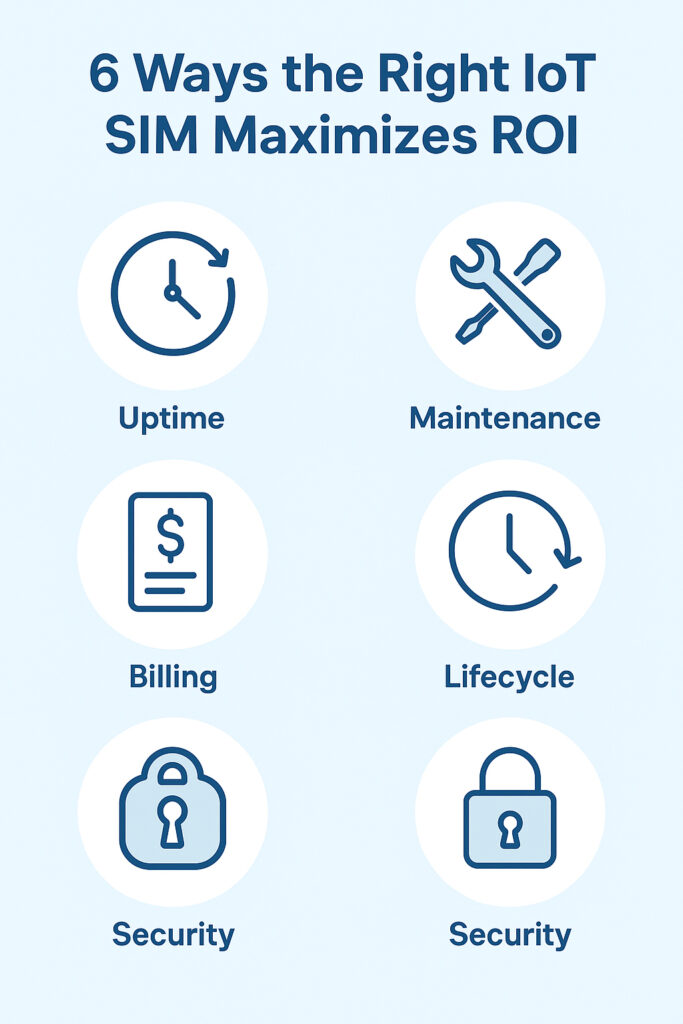
Where the Right SIM Delivers ROI

1. Improved Uptime = Lower Operational Costs

A no-steering SIM connects devices to the strongest available network, ensuring high reliability. In industries like manufacturing or healthcare, even a 1% improvement in uptime translates into significant cost savings.

2. Global Scalability Without Complexity

Enterprises often deploy IoT devices across multiple countries. Instead of sourcing local SIMs (with local contracts, ID requirements, and activation delays), an international IoT SIM provides seamless coverage in 200+ countries. That reduces procurement costs, onboarding time, and administrative overhead.

3. Reduced Maintenance and Truck Rolls

When devices go offline, technicians often need to perform expensive site visits (“truck rolls”). With the right IoT SIM:

  • Devices automatically switch to alternate networks.
  • Issues can be diagnosed remotely via a SIM management portal.
  • Updates and controls are performed over-the-air.

That means fewer truck rolls, reduced labor costs, and faster problem resolution.

4. Data Plan Flexibility = Predictable Billing

The right IoT SIM provider offers pooled data plans, pay-as-you-go, or customizable usage alerts. Instead of getting hit with overage fees, businesses can optimize usage across thousands of devices and align costs with actual consumption.

5. Extended Device Lifecycles

Industrial-grade IoT SIMs are designed to last 10–15 years, even in harsh environments. By reducing the need for replacements, companies save on hardware costs and avoid the disruption of swapping SIMs mid-deployment.

6. Stronger Security = Lower Risk Costs

IoT devices are vulnerable to cyberattacks if not properly secured. Advanced SIMs support private static IPs, VPN tunnels, and encrypted data transfer, reducing the risk of breaches. Avoiding even one data incident saves massive legal and reputational costs.


Real-World ROI Scenarios

Logistics Fleet Management

A logistics provider deployed 5,000 connected trackers across Europe. With a steering SIM, trackers in rural areas often lost connection, leading to delayed deliveries and expensive penalties. After switching to a no-steering IoT SIM, uptime increased by 15%, saving an estimated $2.5 million annually in avoided penalties and labor costs.

Smart Agriculture

A farming cooperative used IoT soil sensors across multiple rural regions. Local SIMs were unreliable, requiring frequent technician visits to reset devices. By deploying rugged IoT SIMs with multi-network redundancy, they reduced truck rolls by 40%, saving $500,000 annually while improving crop yields through consistent data.

Healthcare Monitoring

A telehealth provider equipped patients with wearable monitoring devices. When devices lost connection on weak networks, emergency alerts sometimes failed. After switching to IoT SIMs with no-steering and secure data paths, uptime rose to 99.9%. Improved patient outcomes reduced liability risk and improved ROI dramatically.


Measuring ROI in IoT Deployments

Calculating ROI in IoT projects involves more than just device costs. Businesses must factor in:

  • CAPEX (Capital Expenditures): Devices, sensors, gateways, and initial deployment.
  • OPEX (Operational Expenses): Data plans, maintenance, monitoring, and connectivity.
  • Indirect Savings: Reduced downtime, improved efficiency, and better decision-making.
  • Risk Avoidance: Fewer security breaches, lower liability, and regulatory compliance.

With the right IoT SIM card, OPEX is reduced through flexible data plans, indirect savings are achieved via higher uptime, and risks are mitigated with secure connectivity. All of these factors drive a positive ROI trajectory.


Why OneSimCard IoT Maximizes ROI

At OneSimCard, we design our IoT SIM solutions to directly support business ROI:

  • Global Coverage: 200+ countries, 350+ networks.
  • No-Steering Policy: Devices always connect to the strongest available network.
  • Flexible Data Plans: Pooled, pay-as-you-go, and custom alerts to avoid overages.
  • Industrial-Grade Durability: Long-lasting SIMs built for harsh environments.
  • Advanced Security: Private static IPs, VPNs, and encrypted data transfer.
  • Scalable SIM Management Portal: Monitor, control, and optimize thousands of SIMs from one dashboard.

The result? Lower downtime, fewer maintenance costs, predictable billing, and secure global scalability — all of which contribute to higher ROI.


Final Thoughts

The ROI of IoT deployments doesn’t depend solely on the devices, sensors, or analytics platforms. It depends on the strength of your connectivity strategy. The wrong SIM introduces hidden costs through downtime, poor coverage, and security risks. The right SIM, by contrast, maximizes uptime, simplifies scaling, and protects your data.

In today’s competitive landscape, businesses can’t afford to cut corners on connectivity. By investing in robust, no-steering IoT SIMs, you save money, save time, and unlock the full potential of your IoT projects.

OneSimCard IoT: Smart SIMs for Smart Business.

How Customizable IoT SIM Pricing Fits Your Unique Business Model?

When businesses deploy connected devices across states or countries, managing the cost of connectivity becomes a strategic decision. Here’s the catch: most SIM card pricing models are built for consumer phones, not for devices that might only send a few packets of data per week.

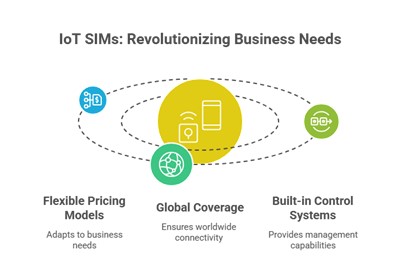
This is where IoT SIMs redefine the rules. They do not respond to businesses’ needs but rather support them with flexible pricing systems, international coverage, and control systems incorporated into their nature. Do you need a few remote sensors or a deployment of an IoT smart city network? As in any business, the IoT SIM plan can make or break your bottom line.

The Problem with Traditional SIMs

Consumer SIMs were never designed for industrial use. Most come with:

  • Fixed data bundles
  • Limited coverage
  • Unnecessary voice/SMS costs
  • Little visibility or control

Now imagine applying that structure to a fleet of vending machines, remote alarms, or GPS trackers that might use only 10–50 MB a month, each. That’s overpaying at scale.

IoT SIMs: Built for Business Logic

“Here’s the thing: by January 2025, 20.4 billion IoT connections were expected to generate over 79 ZB of data globally. Cellular IoT alone is on pace to hit 20.1 billion connections, growing at about 12 % annually. The industry is fueling approximately USD 1.35 trillion in market value. That scale makes pooling and flexible SIM pricing not just smart, but essential.” Source: Mordor Intelligence IoT Market Report (2025)

IoT SIMs (also known as M2M SIMs) are purpose-built for devices. They enable two-way data communication globally and reliably across machines. More importantly, they offer custom pricing models that reflect how these machines use data.

Let’s break this down.

Key IoT SIM Pricing Models

Every business has its own connectivity needs. Whether sending real-time sensor readings or hourly equipment logs, the right pricing plan should align with usage patterns. Here are the most common models:

1. Pay-As-You-Go (PAYG)

It is great for low-bandwidth devices or random consumption. You pay per kilobyte or megabyte consumed, ideal for remote sensors, weather stations, and utility meters.

2. Pooled Plans

Enables sharing of a central data bucket by all active SIMs. It is a brilliant model where you have hundreds (or thousands) of devices and consistent usage trends.

3. Pricing Per Center

With massive mass rollouts or high-volume sectors, providers are always found to be offering custom rates based on countries, data consumption, and active SIM cards used.

Pricing Table Comparison

Plan TypeBest ForTypical Use CaseAverage Cost
PAYGLow-usage, intermittent devicesAsset tracking, alarmsStarting at $0.006/MB
Pooled Data PlansBalanced usage across many SIMsSmart meters, POS systemsStarting at $0.005/MB
Custom EnterpriseLarge-volume or global deploymentsLogistics, fleet, agricultureAs low as $0.005/MB

Note: Prices vary by region and usage tier. Always request a custom quote to get exact figures.

Offering Flexibility in Real Life

Let’s say a logistics company operates 1,000 GPS units across its trucks. Each SIM sends about 50 MB per month. With consumer plans, they’d be forced into a fixed 1GB plan, wasting over 95% of their purchased data.

The company shares 50GB across all units with a pooled IoT SIM plan. The result? Lower cost, less waste, and centralized billing. And if 100 trucks spike during a busy season, they draw from the shared pool, with no throttling or overage fees.

Built-In Tools for Smarter Management

IoT SIM platforms (like the one referenced) offer more than just affordable pricing. They bring complete visibility and control to your fleet of devices.

Key Features to Look For:

  • Real-time usage monitoring
  • Automatic alerts for high usage
  • Remote SIM activation/deactivation
  • Private static IPs and VPN support
  • APIs for integration with internal systems

With these features, teams can prevent overages, flag anomalies, and automate network behavior. This matters even more in agriculture, healthcare, or logistics sectors, where uptime and reliability drive business.

Why Pooled Plans Often Win?

Let’s explore the pooled model more. It’s among the most flexible and cost-saving options for many SMBs and enterprises.

Benefits:

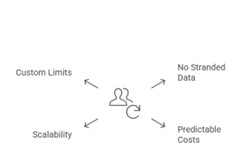
  • Custom limits: Alert thresholds help avoid bill spikes
  • No stranded data: Unused MBs by one SIM help others
  • Scalability: Add new devices without price shock
  • Predictable costs: Flat monthly rate per group


Pooled Plan Usage Example:

Device TypeMonthly Data UseTotal DevicesTotal Usage
Security Cameras500 MB105 GB
GPS Trackers100 MB505 GB
Smart Locks20 MB1002 GB
Total Pool16012 GB

Instead of buying 160 plans, businesses buy a 12GB pool and split it. This is streamlined, innovative, and lean.

Global SIMs: Why Local Doesn’t Cut It Anymore

Standard SIMs often “lock” into one network. IoT SIMs do not. They tap into hundreds of networks across 200+ countries. The SIM connects automatically wherever a signal is stronger, with no extra roaming fees or manual switching.

This is particularly useful for supply chains, cold storage fleets, and mobile medical units moving across international borders.

IoT SIMs vs. Data SIMs: What’s the Real Difference?

FeatureData SIMsIoT SIMs
Built forPhones/tabletsMachines/devices
Pricing modelFixed bundlesFlexible (PAYG, pooled, custom)
Network switchingOften locked to one carrierMulti-network, non-steered
Control toolsLimitedComplete dashboard, APIs, SIM management
Global coverageLimited or high-cost roaming200+ countries, optimized connections

Choosing the Right SIM for Your Business Model

So, how do businesses pick the correct setup?

Consider These Factors:

  1. How much data will each device use monthly?
  2. Is the usage consistent or variable?
  3. How many countries are involved?
  4. How much control or automation is needed?
  5. Do you need public or private IPs?

By reviewing these elements, companies can build a plan that fits them, not vice versa.

How IoT SIM Pricing Supports Specific Industries?

Smart Agriculture

  • Soil sensors, weather stations, and water pumps using <50MB/month
  • Pooled plans reduce costs across seasonal cycles

Transportation & Fleet

  • GPS, ELDs, dash cams using 10MB–2GB/mo
  • Multi-network support ensures uninterrupted coverage

Retail & POS

  • Kiosks, vending machines, and card readers
  • Real-time data with alerts and failover

Healthcare

  • Remote monitoring, portable diagnostics
  • Secure data transmission via VPN and IP filtering

Final Thoughts

Customizable IoT SIM pricing isn’t just a nice-to-have, it’s a must for scaling smart, global, device-driven operations. Instead of choosing between underusing a fixed bundle or risking costly overages, businesses can match their connectivity to actual needs.

Flexible SIM plans align with how your machines work, not how phones were designed to behave. With the right tools, visibility, and pricing, the result is simple: less waste, more control, and better business.

Clear Call to Action

Do you need connectivity that scales with your devices, not your budget? Start by reviewing your deployment’s average data use. Then, explore starter kits or request a custom quote for rates tailored to your needs.

Visit OneSIM Card’s official website to compare plans, request pricing, or test-drive a global SIM setup today.